

Introduction
Contemporary research is increasingly focusing on the phenomenon of mental fatigue. To date, review articles on this topic are available, presenting accumulated results from various perspectives [1-4]. Mental fatigue is a complex set of changes affecting various levels of human organization, from the psychoemotional state to physiological changes. Mental fatigue can lead to a decrease in quality of life, an increased risk of psychosomatic disorders, and the development of chronic diseases [1, 5-7]. The development of fatigue is attributed to the cognitive load that a person encounters daily, especially in the context of the constant use of digital technologies [8, 9]. The mechanisms underlying the development of mental fatigue are not yet fully understood, and this issue remains a subject of debate. It is important to note that a person’s psychoemotional sphere plays an important role in the development of mental fatigue, determining their mood, irritability, and self-esteem [10]. For instance, positive emotions can improve cognitive performance, while negative emotions can lead to decreased motivation, increased risk of burnout, and exacerbation of fatigue symptoms [11, 12].
Research shows that women are more sensitive to the negative effects of life stress than men. Even when the number of stressful events is the same, women may perceive them as more severe [13, 14]. Hormonal factors play a significant role here. For instance, progesterone, by activating the amygdala, can adversely affect anxiety levels and mood [15, 16]. This, in turn, may be more likely to lead to chronic fatigue syndrome [17, 18]. Emotional and motivational behavior, as well as the level of mental performance, are also phase‑dependent [19]. In addition, women tend to exhibit more pronounced emotional reactions than men, who are more likely to suppress their emotions [20]. This difference may stem from several factors: the structure of the brain, peculiarities of the endocrine system, socio‑cultural upbringing conditions, and societal expectations [21, 22]. Meanwhile, Richards [23] demonstrated that emotional suppression leads to visible changes in cognitive functions. These differences become critical in situations of chronic stress and cognitive overload, requiring careful research from a gender perspective.
Therefore, a key task for researchers is to analyze the relationships between mental fatigue, psychoemotional state, and gender. Understanding the mechanisms of mental fatigue can contribute to the development of effective preventative measures and rehabilitation methods. Currently, numerous experimental models exist for studying the development of mental fatigue [24-29]. However, a single, generally accepted model does not exist. It is crucial to consider that different types of cognitive load can lead to different fatigue outcomes. This is because performing different cognitive tasks engages different areas of the brain and requires different amounts of cognitive resources.
This study aims to comprehensively examine the development of mental fatigue in the context of psychoemotional state and gender, taking into account the type of cognitive load used to induce fatigue.
Material and Methods
Sample
The study was conducted at Saratov State University. The sample included 35 volunteers (57% women, 43% men) with no history of mental disorders, with a mean age of 21.5 years.
The study protocol was approved by the local Ethics Committee of V.I. Razumovsky Saratov State Medical University (Protocol No. 15, June 30, 2025). Before the experiment, all participants were informed about the study’s aims and procedures and subsequently provided written informed consent in accordance with the Declaration of Helsinki. This nonrandomized experimental study was conducted in accordance with the Transparent Reporting of Evaluations with Nonrandomized Designs (TREND) guidelines.
Mental fatigue-inducing model
A three-stage experimental protocol was employed to induce mental fatigue:
(1) Initial psychological testing (pre-test phase);
(2) Mental fatigue-inducing procedure (MFI);
(3) Psychological retesting (post-test phase).
The MFI phase consisted of 16 blocks, each lasting 15 minutes. Fatigue was induced using two different types of cognitive tasks defining two experimental series.
Series 1 involved the use of sequential arithmetic subtraction problems during the MFI stage. A predetermined three-digit number was displayed on the screen. The volunteer was asked to subtract 7 and enter the result using the keyboard. The entered number was not displayed on the computer screen. The volunteer then subtracted 7 from the new number and entered the new result, continuing this process throughout the entire block. Time for entering the answer was not limited. In the first block, the number 999 was displayed, in the second, 998, in the third, 997, and so on. During the task, both the correctness of the entered number and the time spent entering it were recorded. Series 2 involved the working memory task during the MFI stage. Two target letters were displayed on the computer screen for 5 seconds, followed by two target positions for the volunteer to memorize, each for 5 seconds. After this, the letters began to appear in different positions on the screen. Each display lasted 1 second. The volunteer was instructed to press a keyboard key whenever the target letter and target position matched. As in the first series, the correctness of responses and the time spent on each response were recorded.
This protocol was consistent with established paradigms in psychophysiological research aimed at studying the dynamics of functional states under cognitive load [30].
During the experiment, volunteers could interrupt the study at the MFI stage if they experienced subjective mental exhaustion. In each series of the experiment, the number of blocks each volunteer was able to complete was recorded, and based on this, the total duration of cognitive load experienced by the subject was calculated. In addition, the total number of responses, the total number of correct responses, and the total number of incorrect responses for all completed blocks were recorded for each series, along with the average values of these parameters for each block. Mean reaction time was also calculated. These parameters serve as indicators of cognitive performance during the procedure of inducting mental fatigue.
Psychological state was assessed during both the pre-test and post-test stages with psychoemotional and cognitive characteristics assessed. All volunteers participated in two series of the experiment. For each volunteer, the series were conducted at an interval of 2-3 days.
The diagnostic instruments included: a subjective assessment of mental fatigue (A.B. Leonov’s Acute Mental Fatigue Questionnaire); Well-being, Activity, Mood (WAM) questionnaire; an analysis of attention characteristics (Anfimov’s correction tables); and a performance measurement (Krapelin test). In Series 1, the following were additionally used: S. Kasyanov’s Quantitative Relations test to assess logical thinking and a test of mental speed (recording the number of correct answers and the time spent). In Series 2, short-term memory was additionally assessed using the Digit Span Memory test (subtest 5) of the D. Wechsler Memory Scale. Additionally, the A.B. Leonov’s chronic fatigue index (CFI) was calculated for all participants before the experimental procedures.
Statistical analysis
Statistical analysis was performed using SPSS Statistics 22. We used the Mann-Whitney U test to identify statistically significant differences between independent groups and the Wilcoxon signed-rank test was to detect within-group differences. Spearman’s rank correlation coefficient was used for correlation analysis. Due to the small sample size and large number of variables, the analysis was purely exploratory in nature; correction for multiple comparisons was not performed; consequently, the results should be interpreted with caution.
Results
The results were analyzed in two consecutive steps. The first one involved comparing cognitive and psychoemotional characteristics by the type of mental fatigue induction, i.e., identifying differences between the two experimental series. The second step, the aforementioned characteristics were analyzed taking into account gender.
Step 1: Comparative analysis of experimental series 1 and 2
The Mann-Whitney U test revealed that the mean reaction time was significantly longer during the subtraction arithmetic task (Table 1). Analysis of attention characteristics using Anfimov’s correction tables revealed that U (1,000) (the number of errors per 1,000 symbols) and neural network mobility were also significantly higher in Experimental Series 1. However, it is important to note that attentional performance was significantly higher after inducing fatigue via the working memory task.
Table 1. Comparative analysis of cognitive characteristics
|
Parameter |
Me [Q1; Q3] |
U |
p |
|
|
Series 1 |
Series 2 |
|||
|
Reaction time, s |
3.422 [3.015; 6.266] |
0.741 [0.669; 0.804] |
0.000 |
0.000 ** |
|
Mobility of nervous processes, pts. |
1.54 [1.45; 1.7] |
1.48 [1.34; 1.53] |
348.000 |
0.003 ** |
|
U (1,000), count |
20.15 [9.038; 28.175] |
10.54 [3.26; 16.98] |
352.000 |
0.004 ** |
|
Productivity, pts. |
83.23 [77.975; 91.71] |
89.96 [85.49; 94.98] |
372.000 |
0.007 ** |
Significant differences in these parameters were also found when comparing absolute changes, calculated as the difference between pre-test and post-test values, in the two experimental series (Table 2).
Table 2. Comparative analysis of absolute changes (posttest – pretest) in the two experimental series
|
Parameter |
Me [Q1; Q3] |
U |
p |
|
|
Series 1 |
Series 2 |
|||
|
Mobility of nervous processes, pts. |
0.040 [-0.035; 0.123] |
0.000 [-0.090; 0.043] |
423.000 |
0.039 * |
|
U (1,000), count |
6.630 [1.685; 14.200] |
-0.920 [-5.470; 2.560] |
340.500 |
0.002 ** |
|
Productivity, pts. |
-4.520 [-9.978; -1.680] |
0.440 [-4.130; 3.322] |
360.500 |
0.005 ** |
Specifically, the values for mobility of nervous processes, errors per 1,000 characters, and attentional efficiency changed significantly in Experimental Series 1. Notably, after completing the working memory tasks, the absolute changes in mobility of nervous processes and errors were negative, indicating a decrease in these parameters after inducing mental fatigue.
Subsequently, an analysis of within-group differences was conducted using the Wilcoxon signed-rank test to characterize changes in cognitive and psychoemotional components after inducing mental fatigue.
The results of Experimental Series 1 (the arithmetic subtraction task) revealed a significant reduction in well-being, activity, and mood (Table 3).
Table 3. Psychoemotional characteristics at different stages of two experimental series
|
Experimental series |
Parameter |
Me [Q1; Q3] |
p |
|
|
Pretest |
Posttest |
|||
|
Series 1 |
Well-being, pts. |
5.050 [4.100; 5.800] |
3.650 [2.725; 4.700] |
0.000 ** |
|
Activity, pts. |
4.250 [3.825; 5.275] |
3.400 [2.825; 3.800] |
0.000 ** |
|
|
Mood, pts. |
4.900 [4.300; 5.875] |
4.800 [3.850; 5.275] |
0.008 ** |
|
|
Acute fatigue, pts. |
8.000 [5.250; 13.750] |
23.500 [19.000; 29.000] |
0.000 ** |
|
|
Series 2 |
Well-being, pts. |
5.200 [4.475; 5.800] |
4.000 [3.325; 4.850] |
0.000 ** |
|
Activity, pts. |
4.650 [3.875; 5.525] |
3.650 [2.975; 4.325] |
0.000 ** |
|
|
Mood, pts. |
5.100 [4.375; 5.850] |
4.400 [3.900; 5.400] |
0.000 ** |
|
|
Acute fatigue, pts. |
7.000 [4.000; 10.000] |
19.000 [14.750; 27.000] |
0.000 ** |
|
Concurrently, acute fatigue more than doubled (Table 4). A significant increase in errors per 200 and 1,000 characters was revealed when working with Anfimov’s correction tables, while attentional efficiency statistically significantly decreased.
Table 4. Characteristics of attention at the pre-test and post-test stages in Experimental Series 1
|
Experimental series |
Parameter |
Me [Q1; Q3] |
p |
|
|
Pretest |
Posttest |
|||
|
Series 1 |
U (200), count |
2.05 [0.77; 3.57] |
4.03 [1.805; 5.625] |
0.006 ** |
|
U (1000), count |
10.3 [3.85; 17.86] |
20.15 [9.0375; 28.175] |
0.006 ** |
|
|
Productivity, pts. |
90.55 [84.85; 96.295] |
83.23 [77.975; 91.71] |
0.005 ** |
|
As for Experimental Series 2, significant changes in psychoemotional characteristics were noted as well, as evidenced by WAM scores and the acute fatigue index (AFI) (Table 3). Thus, according to subjective assessments, participants experienced fatigue regardless of the induction type, while cognitive performance was more impaired after completing the arithmetic subtraction task (Experimental Series 1).
We subsequently conducted a correlation analysis separately for each experimental series.
Correlation analysis
Correlations in Experimental Series 1: Arithmetic subtraction task
The CFI correlated inversely with the total duration of mental workload (r=-0.484, p=0.011), the total number of responses, and the number of incorrect responses (r=-0.434, p=0.024; and r=-0.425, p=0.027, respectively) (Figure 1). Furthermore, the CFI correlated positively with the AFI obtained at the posttest (r=0.614, p=0.001).
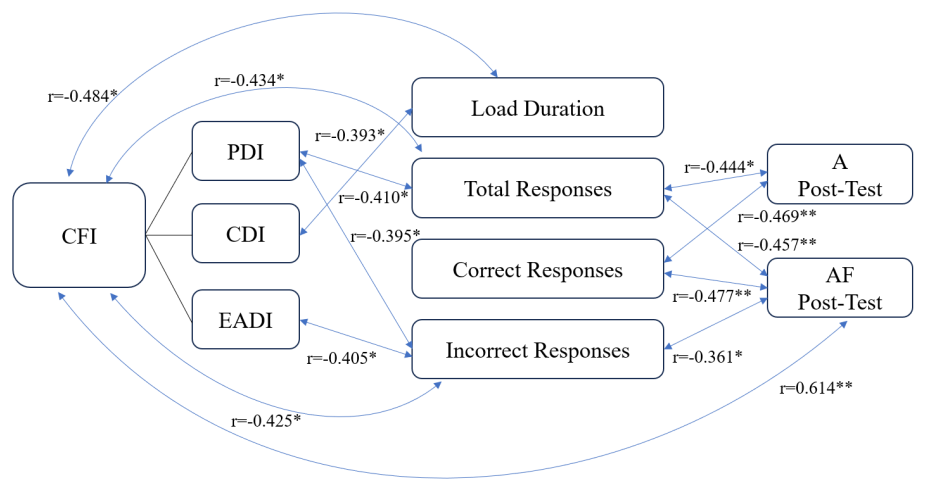
Figure 1. Correlations of CFI and its components with psychoemotional and cognitive characteristics in Experimental Series 1.
CFI, chronic fatigue index; PDI, physiological discomfort index; CDI, cognitive discomfort index; EADI, emotional and affective disorders index; A, activity; AF, acute fatigue. The p-value was calculated using Spearman rank-order correlation. *, p≤0.05; **, p≤0.01.
Using the same principle, correlations were measured between various CFIs (derived from the CFI subscales) and indicators of cognitive performance (Figure 1). The table presents correlations for the physiological discomfort index (PDI), the cognitive discomfort index (CDI), and the emotional and affective disorders index (EADI). PDI correlates with the total number of responses and the number of incorrect responses (r=-0.410, p=0.038; and r=-0.395, p=0.046, respectively). CDI correlates with the duration of the load (r=-0.393, p=0.047). EADI correlates with the total number of incorrect responses (r=-0.434, p=0.024).
As for the psychoemotional characteristics, only post-load activity (posttest) correlated directly with the total number of responses and the number of correct responses per block (r=0.444, p=0.011; and r=0.469, p=0.007, respectively).
The AFI correlated inversely with the total number of answers, the number of correct answers, and the number of incorrect answers (r=-0.457, p=0.005; r=-0.477, p=0.004; r=-0.361, p=0.036, respectively).
Correlations in Experimental Series 2: Working memory tasks
Correlation analysis of the second experimental series yielded the following results. The CFI correlated inversely with the total load duration (r=-0.420, p=0.029); however, unlike in the first series, no correlations with cognitive performance indicators were discovered (Figure 2).
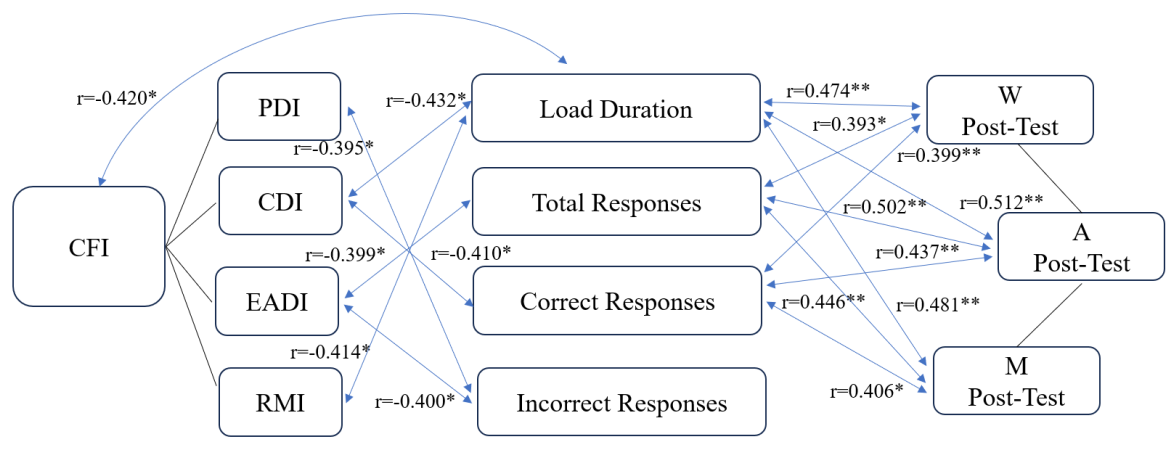
Figure 2. Correlations of CFI and its components with psychoemotional and cognitive characteristics in experimental series 2.
CFI, chronic fatigue index; PDI, physiological discomfort index; CDI, cognitive discomfort index; EADI, emotional and affective disorders index; RMI, reduced motivation index; W, well-being; A, activity; M, mood. The p-value was calculated using Spearman rank-order correlation. *, p≤0.05; **, p≤0.01.
Various components of the CFI also correlated inversely with various response number indicators during the working memory tasks. E.g., PDI correlated with the total number of incorrect responses (r=-0.395, p=0.025); the CDI correlated with the load duration and the total number of correct responses (r=-0.432, p=0.028; and r=-0.410, p=0.038, respectively); the EADI correlated with the total number of responses and the number of incorrect responses (r=-0.399, p=0.043; and r=-0.400, p=0.043, respectively); the reduced motivation index (RMI) correlated with the duration of the cognitive load (r=-0.414, p=0.036).
The pattern of correlations differed slightly from Series 1, but retained the general trend. Interestingly, no correlations with the AFI were detected in this series.
Notably, more correlations were found for the WAM indicators at the post-test stage compared to Series 2 (Figure 2). These indicators correlated directly with various characteristics of cognitive load. Well-being was associated with the duration of the cognitive load, the total number of responses, and the number of correct responses (r=0.474, p=0.004; r=0.393, p=0.020; and r=0.399, p=0.018, respectively). A similar pattern of correlations was observed for activity (r=0.512, p=0.002; r=0.502, p=0.002; and r=0.437, p=0.009, respectively) and mood (r=0.481, p=0.003; r=0.446, p=0.003; and r=0.406, p=0.016, respectively).
This may indicate that psychoemotional state plays a significant role in the performance of working memory tasks.
Step 2: Comparative analysis of experimental series 1 and 2 by gender
The analysis revealed the following distribution of participants by level of chronic fatigue (Figure 3).
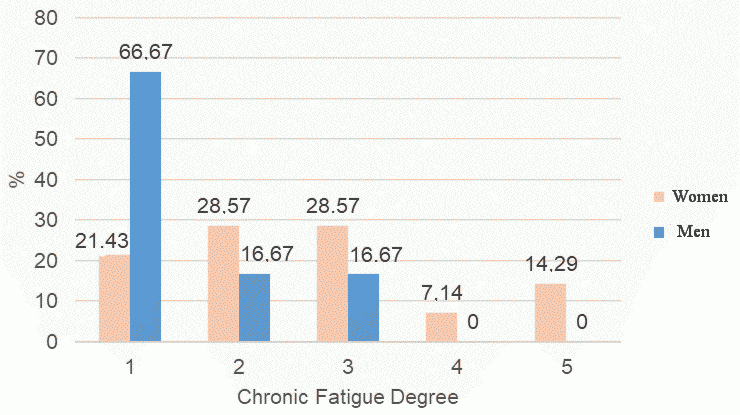
Figure 3. Distribution of women and men by the degree of chronic fatigue, %: (1) no signs, (2) mild, (3) moderate, (4) severe and (5) transition to pathological conditions.
A significant number of women experienced chronic fatigue of varying degrees: more than half (64.28%) demonstrated either mild, moderate, or severe fatigue. Cases of asthenic syndrome were also present, accounting for 14.29% of the group. However, just over one-fifth (21.43%) of study participants exhibited no signs of chronic fatigue.
A significantly more favorable picture was observed among men: the overwhelming majority (two-thirds) showed no signs of fatigue, while the remainder experienced only mild (16.67%) or moderate (16.67%) fatigue without progressing to more severe fatigue grade.
Therefore, women overall exhibit higher rates of chronic fatigue vs. men. They more often experience mild to moderate fatigue, including cases approaching pathological states, whereas most men do not exhibit signs of chronic fatigue, and no cases of severe fatigue were recorded.
A comparative analysis of the CFI and its components was then conducted (Table 5). It was found that the mean CFI value in women was twice as high as in men. This value was particularly influenced by the PDI and the EADI, which were also significantly higher in women.
Table 5. Values of CFI and its components in women and men
|
Parameter |
Me [Q1; Q3] |
U |
p |
|
|
Men |
Women |
|||
|
CFI, pts. |
10 [5.25; 19] |
26.5 [20.25; 35.75] |
41.500 |
0.018 * |
|
PDI, pts. |
3.5 [0.5; 7.5] |
11.5 [7.5; 14.5] |
18.000 |
0.001 ** |
|
CDI, pts. |
2.5 [0.25; 10.75] |
7.5 [4.5; 13.75] |
50.000 |
0.080 |
|
EADI, pts. |
0.5 [0; 2] |
4 [2; 8] |
34.000 |
0.009 ** |
|
RMI, pts. |
3.5 [1.25; 4] |
3.5 [1.75; 6] |
68.500 |
0.419 |
Analysis of the two experimental series revealed specific patterns in the impact of mental fatigue on psychoemotional and cognitive performance, taking into account gender-based differences in the volunteers.
Gender comparison in Experimental Series 1
Analysis of the results of Experimental Series 1 revealed that after completing the cognitive tasks, women experienced significantly higher levels of acute fatigue (24.56±8.52, median 26.5 [20.25; 35.75] in women vs. 20.57±5.48, median 10 [5.25; 19] in men, p=0.001). This indicates greater mental strain experienced by women when performing tasks of this type. No significant gender differences in WAM scores were found either before or after induction of mental fatigue. No significant gender differences were also found in cognitive performance scores.
A within-group analysis was then conducted for each group. We revealed that after the cognitive load, men experienced a significant reduction in well-being and activity, while their AFI increased (Table 6).
Table 6. Psychoemotional characteristics of women and men at different stages of experimental series 1
|
Group |
Parameter |
Me [Q1; Q3] |
p |
|
|
Pretest |
Posttest |
|||
|
Males |
Well-being, pts. |
5.1 [4.85; 5.9] |
4.1 [3.45; 4.7] |
0.001 ** |
|
Activity, pts. |
4.4 [3.9; 5.65] |
3.4 [3.15; 3.85] |
0.002 ** |
|
|
Mood, pts. |
4.9 [4.3; 6.05] |
4.8 [4.15; 5.4] |
0.107 |
|
|
Acute fatigue, pts. |
8 [5; 10] |
19 [19; 23.5] |
0.001 ** |
|
|
Females |
Well-being, pts. |
4.8 [3.7; 5.8] |
3.1 [2.6; 4.2] |
0.010 * |
|
Activity, pts. |
4.2 [3.5; 4.8] |
3 [2.7; 3.8] |
0.013 * |
|
|
Mood, pts. |
4.9 [4.2; 5.8] |
4.6 [3.6; 5.3] |
0.049 * |
|
|
Acute fatigue, pts. |
9 [7; 16] |
27 [18; 31] |
0.000 ** |
|
A similar pattern was observed in women (Table 6). They also experienced a significant decrease in mood.
No significant differences in cognitive performance were found among men. In contrast, women showed a significant increase in the number of errors per 1,000 and 200 symbols in Anfimov’s correction tables and a significant decrease in productivity (Table 7). Women also performed better on the Quantitative Relationships logical reasoning test after the load.
Table 7. Parameters of attention and logical thinking in women at different stages of the experimental series 1
|
Group |
Parameter |
Me [Q1; Q3] |
p |
|
|
Pretest |
Posttest |
|||
|
Females |
U (1,000), count |
6.315 [1.7625; 15.293] |
16.3 [8.235; 26.193] |
0.036 * |
|
U (200), count |
1.235 [0.333; 2.998] |
3.24 [1.648; 5.22] |
0.036 * |
|
|
Productivity, pts. |
94.025 [86.695; 98.253] |
85.94 [79.228; 92.398] |
0.033 * |
|
|
Quantitative relationships, pts. |
2 [1; 4] |
3 [2; 4] |
0.002 ** |
|
Correlation analysis in the women’s group
The conducted correlation analysis revealed relationships between the CFI and its components with cognitive characteristics (Figure 4). In women, the CFI correlated inversely with load duration and the number of correct answers (r=-0.583, p=0.023; and r=-0.556, p=0.030, respectively). The PDI correlated inversely with total exercise duration (r=-0.755, p=0.002) and total number of responses (r=-0.587, p=0.027). The EADI correlated inversely with the number of correct responses and the speed of mental processes after the intellectual load (r=-0.587, p=0.027).
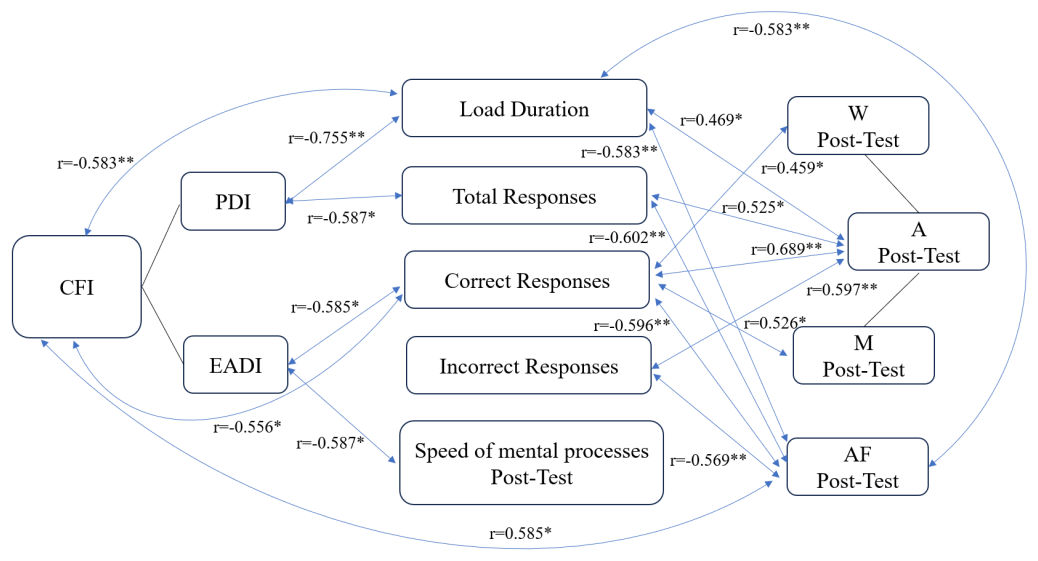
Figure 4. Correlations of psychoemotional and cognitive characteristics of women in experimental series 1.
CFI, chronic fatigue index; PDI, physiological discomfort index; EADI, emotional and affective disorders index; W, well-being; A, activity; M, mood; AF, acute fatigue. The p-value was calculated using Spearman rank-order correlation. *, p≤0.05; **, p≤0.01.
The number of correct answers correlated directly with WAM scores after the load (r=0.459, p=0.048 for well-being; r=0.689, p=0.001 for activity; r=0.526, p=0.021 for mood). Activity at the post-test stage also correlated directly with the load duration, the total number of responses, and the number of incorrect responses (r=0.469, p=0.043; r=0.525, p=0.021; r=0.597, p=0.007, respectively).
The post-task AFI correlated inversely with the total load duration, total number of responses, number of correct responses, and number of incorrect responses (r=-0.583, p=0.007; r=-0.602, p=0.005; r=-0.596, p=-0.006; r=-0.569, p=0.009, respectively).
Correlation analysis in in the men’s group
The RMI score correlated directly with the number of incorrect responses (r=0.677, p=0.016) (Figure 5).
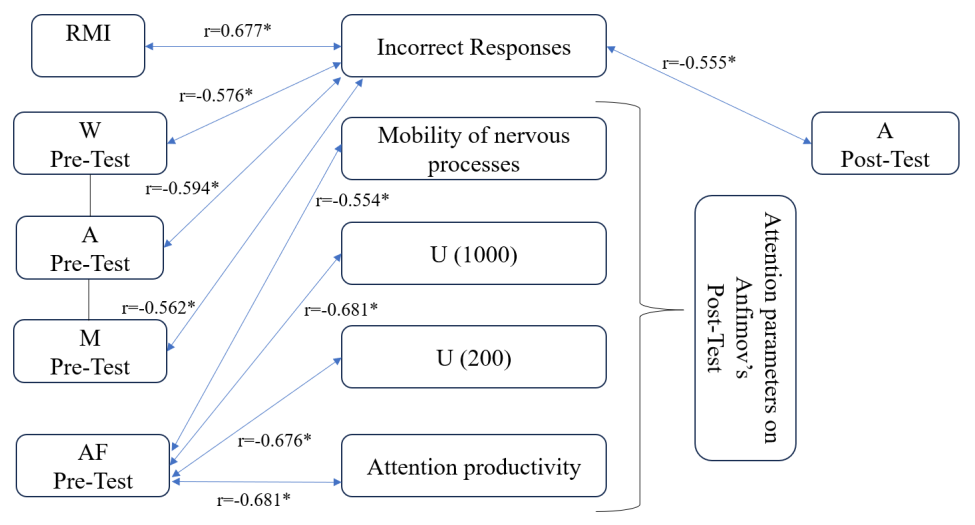
Figure 5. Correlations of psychoemotional and cognitive characteristics of men in experimental series 1.
RMI, reduced motivation index; W, well-being; A, activity; M, mood; AF, acute fatigue; U (200), number of errors per 200 characters in Anfimov’s correction tables. U (1,000), number of errors per 1,000 characters in Anfimov’s correction tables. The p-value was calculated using Spearman rank-order correlation. *, p≤0.05; **, p≤0.01.
Pre-test WAM scores correlated inversely with the number of incorrect responses (r=-0.576, p=0.025 for well-being; r=-0.594, p=0.019 for activity; r=-0.562, p=0.029 for mood). Post-test activity also correlated inversely with the number of incorrect responses (r=-0.555, p=0.049).
Acute fatigue during the pre-test stage correlated inversely with post-load attention parameters using Anfimov’s correction tables: mobility of nervous processes, the number of errors per 1,000 and 200 symbols, and attentional efficiency (r=-0.554, p=0.040; r=-0.681, p=0.007; r=-0.676, p=0.007; r=-0.681, p=0.007, respectively).
Thus, men’s initial psychoemotional state has a greater impact on cognitive performance after completing the task, while the same characteristics in women are more dependent on their subjective success in completing the task during cognitive load.
Gender comparison in Experimental Series 2
Analysis of the working memory task results showed that men completed more blocks of MFI procedure than women, which was also reflected in the overall task duration (Table 8). Women completed the working memory task much faster – in almost 40% less time. Consequently, women also had a significantly lower total number of responses, number of correct responses, and average number of correct responses per block. Furthermore, women gave significantly more incorrect responses.
Table 8. Comparative analysis of the characteristics of the mental fatigue induction stage in experimental series 2
|
Series |
Parameter |
Me [Q1; Q3] |
U |
p |
|
|
Men |
Women |
||||
|
Series 2 |
Number of blocks, count |
16 [9; 16] |
9 [6.25; 13.5] |
81.000 |
0.017 * |
|
Total duration, s |
14377.529 [8103.304; 14402.1589] |
8015.698 [5566.231; 12026.230] |
70.000 |
0.008 ** |
|
|
Correct responses, count |
1528 [1037; 1741] |
819.5 [427.25; 1342.25] |
70.500 |
0.008 ** |
|
|
Total responses, count |
1813 [1150; 1974] |
1118.5 [752.5; 1743.25] |
87.000 |
0.036 * |
|
|
Mean correct responses/block, count |
107.438 [95.5; 111.333] |
93.208 [67.786; 103.547] |
91.500 |
0.051 |
|
|
Mean incorrect responses/block, count |
12.556 [8.091; 24.813] |
22.881 [15.672; 57.604] |
91.000 |
0.049 * |
|
Regarding the psychoemotional domain, women had significantly lower well-being and mood scores after the cognitive load vs. men (Table 9).
Table 9. Psychoemotional characteristics of women and men at different stages of the experimental series 2
|
Group |
Parameter |
Me [Q1; Q3] |
P (when comparing pretest with posttest)1 |
Р (when compared with a group of girls)2 pretest |
Р (when compared with a group of girls)2 posttest |
|
|
Pretest |
Posttest |
|||||
|
Males |
Well-being, pts. |
5.6 [4.5; 6.8] |
4.5 [3.7; 5.4] |
0.006 ** |
0.089 |
0.025* |
|
Activity, pts. |
5.2 [4; 5.6] |
4.2 [3.3; 5.1] |
0.004 ** |
0.133 |
0.064 |
|
|
Mood, pts. |
5.4 [4.2; 6.3] |
5.3 [4; 5.9] |
0.134 |
0.350 |
0.026* |
|
|
Acute fatigue, pts. |
7 [4; 10] |
15 [12; 21] |
0.001 ** |
0.402 |
0.019* |
|
|
Mood (pre-post), pts. |
0 [-0.4; 0.1]* (p=0.018) |
- |
0.018* |
|||
|
Females |
Well-being, pts. |
5 [4.4; 5.5] |
3.7 [2.3; 4.3] |
0.001 ** |
- |
- |
|
Activity, pts. |
4.4 [3.8; 5.3] |
3.2 [2; 4.2] |
0.005 ** |
- |
- |
|
|
Mood, pts. |
5.1 [4.4; 5.5] |
4.1 [3.7; 5.1] |
0.002 ** |
- |
- |
|
|
Acute fatigue, pts. |
7 [5; 11] |
23 [16; 28] |
0.000 ** |
- |
- |
|
|
Mood (pre-post), pts. |
-0.8 [-1.2; -0.3] |
- |
- |
- |
||
In terms of absolute mood changes, this indicator significantly decreased in women vs. men. As in Experimental Series 1, the AFI was higher in women than in men (Table 9).
Within-group analysis revealed the following. In men, solely well-being and activity scores significantly decreased, while acute fatigue score increased (Table 9) and no significant differences in cognitive performance were detected. A similar pattern was observed in Experimental Series 1.
In women, all WAM scores decreased, and acute fatigue score increased as well (Table 9). However, unlike men, cognitive load also affected memory. After inducing mental fatigue, women were able to repeat fewer numbers in increasing order (5.21±0.86 at the pretest and 5.95±1.27 at the posttest, with p=0.018).
A correlation analysis was subsequently conducted.
Correlation analysis in the women’s group
Correlation analysis in the women’s group revealed the following pattern. The PDI correlated directly with the number of errors per 1,000 and 200 characters, while correlating inversely with performance after mental fatigue induction (r=0.616, p=0.019; r=-0.585, p=0.028; and r=-0.616, p=0.019, respectively) (Table 10). The WAM and AFI scores also correlated with these indicators of attention (Table 10).
Table 10. Correlations of psychoemotional characteristics with attention indicators
|
Parameter |
Pretest |
||
|
U (1,000) |
U (200) |
Productivity |
|
|
PDI |
0.616*. р=0.019 |
-0.585*. р=0.028 |
-0.616*. р=0.019 |
|
Well-being (posttest) |
-0.517*. р=0.020 |
-0.537*. р=0.015 |
0.517*. р=0.020 |
|
Activity (posttest) |
-0.447*. р=0.048 |
-0.466*. р=0.038 |
0.447*. р=0.048 |
|
Mood (posttest) |
-0.554*. р=0.011 |
-0.561*. р=0.010 |
0.554*. р=0.011 |
|
AF (posttest) |
0.533*. р=0.016 |
0.560*. р=0.010 |
-0.533*. р=0.016 |
Additionally, the PDI correlated inversely with the total duration of the cognitive load and the number of correct responses (r=-0.587, p=0.027; and r=-0.545, p=0.044, respectively) (Figure 6). Activity after cognitive load correlated directly with these indicators (r=0.511, p=0.021; r=0.531, p=0.016, respectively).
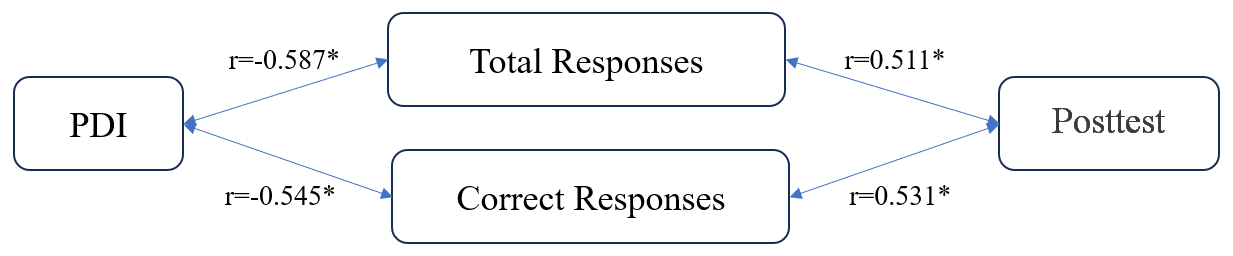
Figure 6. Correlations of psychoemotional and cognitive characteristics of women in experimental series 2.
PDI, physiological discomfort index; A, activity. The p-value was calculated using Spearman rank-order correlation; *, p≤0.05.
Correlation analysis in the men’s group
The cognitive load index (CFI) was directly correlated with the number of numbers repeated in ascending order after cognitive load (r=0.636, p=0.026) (Figure 7). The PDI score was directly correlated with the number of numbers repeated in both ascending and descending order after cognitive load (r=0.601, p=0.039; and r=0.646, p=0.023, respectively). The EADI correlated inversely with the mean reaction time and the number of incorrect responses (r=-0.697, p=0.012; and r=-0.731, p=0.007, respectively).
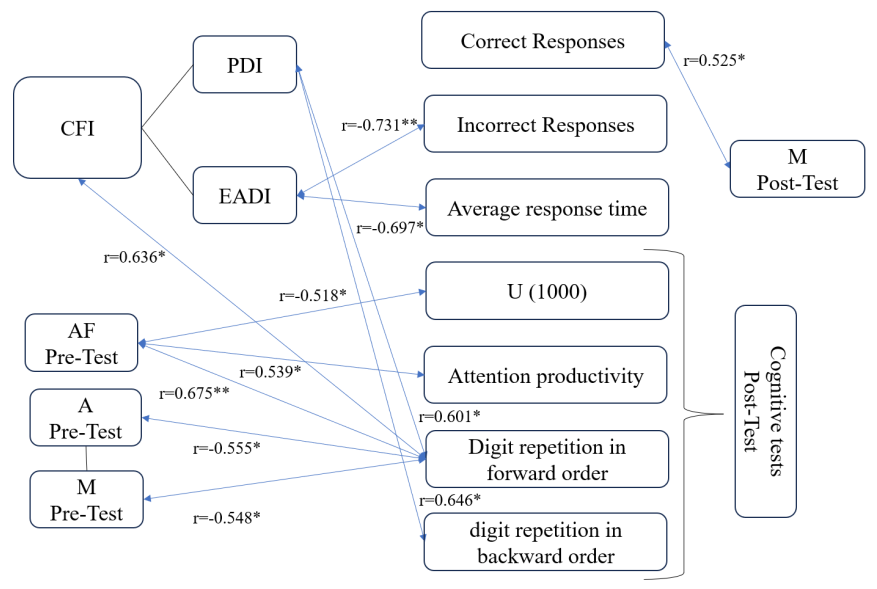
Figure 7. Correlations of psychoemotional and cognitive characteristics of men in experimental series 2.
CFI, chronic fatigue index; PDI, physiological discomfort index; EADI, emotional and affective disorders index; AF, acute fatigue; A, activity; M, mood; U (1,000), number of errors per 1,000 characters in Anfimov’s correction tables. The p-value was calculated using Spearman rank-order correlation; *, p≤0.05; **, p≤0.01.
Activity and mood at the pretest correlated inversely with repeating numbers in ascending order after the cognitive load (r=-0.555, p=0.039; and r=-0.548, p=0.042, respectively). Mood at the posttest correlated directly with the number of correct responses during the MFI stage (r=0.525, p=0.044).
The AFI was inversely correlated with the number of errors per 1,000 symbols in Anfimov’s correction tables after fatigue induction (r=-0.518, p=0.048). A direct correlation of AFI was revealed with attentional efficiency and repeating numbers in ascending order after fatigue induction (r=0.539, p=0.038 and r=0.675, p=0.008, respectively).
Comparative analysis of experimental series 1 and 2, taking into account gender
Women needed more time for completing the arithmetic subtraction task than the working memory task, as evidenced by the total load duration. Thus, in women, the total cognitive load time in Series 1 was significantly higher than in Series 2 (Table 11). No such differences were established in men.
Table 11. Cognitive characteristics and attention indicators in women and men in two experimental series
|
Group |
Parameter |
Me [Q1; Q3] |
U |
p |
|
|
Series 1 |
Series 2 |
||||
|
Men |
Load duration, s |
13130.108 [9725.242; 14490.665] |
14377.529 [8103.304; 14402.1589] |
96.000 |
0.494 |
|
Reaction speed, s |
3.268 [2.955; 5.562] |
0.741 [0.623; 0.770] |
0.000 |
0.000 ** |
|
|
Mobility of nervous processes, posttest, pts. |
1.54 [1.5; 1.7] |
1.5 [1.33; 1.546] |
55.500 |
0.030 * |
|
|
U (1,000) (post-pre), count |
24.49 [9.21; 30.25] |
6.9 [1.637; 17.14] |
45.000 |
0.009 ** |
|
|
Productivity (post-pre), pts. |
-4.52 [-9.54; -3.598] |
-0.239 [-4.61; 3.322] |
63.000 |
0.067 |
|
|
Women |
Load duration, s |
11770.867 [7445.684; 14481.733] |
8015.698 [5566.230; 12026.230] |
128.000 |
0.050 ** |
|
Reaction speed, s |
3.612 [3.034; 6.481] |
0.755 [0.692; 0.804] |
0.000 |
0.000 ** |
|
|
Mobility of nervous processes, posttest, pts. |
1.51 [1.393; 1.68] |
1.44 [1.353; 1.518] |
128.000 |
0.050 ** |
|
|
U (1000) (post-pre), count |
16.3 [8.235; 26.193] |
10.85 [4.489; 16.923] |
143.000 |
0.123 |
|
|
Productivity (post-pre), pts. |
-4.48 [-11.803; -0.405] |
0.865 [-3.635; 3.786] |
120.000 |
0.030 * |
|
Reaction speed in both groups was significantly slower during the working memory task compared to the arithmetic subtraction task. This can be explained by the fact that arithmetic operations involve numerical processing and computational operations, while working memory tasks involve fewer processing and analysis steps.
Interestingly, after completing the tasks in Experimental Series 1, the mobility of nervous processes according to Anfimov’s correction tables was significantly higher than after Series 2 for both men and women. Conversely, productivity was significantly higher after the cognitive load in Series 2. However, this difference was significant only for men. It is also worth noting that the absolute change in the number of errors per 1,000 symbols in Anfimov’s correction tables was significantly greater after solving the arithmetic subtraction tasks in both groups. Meanwhile, the productivity score was more dependent on cognitive load in Series 1, but only in women.
Discussion
A comparative analysis of the two types of cognitive load revealed significant differences in their impact on the participants’ psychophysiological state. Arithmetic subtraction tasks induced a more pronounced load on the executive control system of the brain, as evidenced by a significant increase in the number of errors during the proofreading/correction test and a decrease in attentional efficiency. It seems that this type of load is associated with significant resource mobilization. In contrast, the working memory task demonstrated relative preservation of attentional efficiency, indicating a more economical mode of functioning of the executive control system.
These correlations make it possible to discuss how the initial psychoemotional state of volunteers influences their performance under induced mental fatigue and how the parameters of this load determine their post-experimental state.
Given the exploratory nature of the study and the lack of correction for multiple comparisons, the following correlational results should be considered hypothesis-generating and require confirmation in larger samples.
The relationships identified in the first series of the experiment showed that the most powerful predictor of decreased performance at the MFI stage is the CFI. Individuals with high levels of fatigue become exhausted more quickly and provide fewer responses during periods of stress. The observed correlations between CFI and overall performance are consistent with research [31, 32], which demonstrate a direct link between high levels of chronic fatigue and a decline in cognitive function, particularly memory and attention. The components of chronic fatigue, viz., physical and cognitive discomfort, play a particularly important role. The latter is significantly related to the duration of the task that volunteers can tolerate. The task itself (specifically, subtraction without visual support) induces cognitive discomfort, and the presence of background cognitive fatigue causes people to stop the mental task earlier.
It is important to note the impact of the cognitive load per se. Specifically, the more responses volunteers provided, the less active they were during the post-test stage.
We find the direct correlation between CFI and symptoms of acute fatigue after completing cognitive tasks during the post-test phase particularly interesting. This result may indicate a cumulative effect of fatigue: an initially high level of chronic fatigue reduces the body’s functional reserve. This leads to a more rapid and pronounced development of acute fatigue in response to cognitive load. This finding can be explained in terms of the compensatory control theory [33], according to which maintaining performance with increasing fatigue requires greater energy expenditure; however, an initially exhausted system does not have adequate compensatory capacity. Hence, the initial level of chronic fatigue shapes the psychoemotional state after cognitive stress.
The correlation pattern in Series 2 looks different. Unlike Series 1, the critical factor here is the speed of stimulus switching, which, in turn, forces mobilization. A negative effect of the level of chronic fatigue is also present, but in this case, cognitive discomfort and reduced motivation play a decisive role. The presence of background cognitive discomfort under time constraints leads to a decrease in attention. The identified correlations with emotional affective disorder (i.e., mood) indicate a link between working memory and emotional state. Interestingly, numerous direct correlations were revealed between task performance parameters at the MFI stage and WAM scores at the post-test stage. Subjective psychoemotional state after task completion is determined by the success of its completion. Thus, a high level of activity during the task helps maintain a high psychoemotional state after its completion.
Comparing the results of the two series reveals different mechanisms of mental fatigue. The series involving arithmetic subtraction is associated with energy depletion. Sequential subtraction is a monotonous task, requiring solely volitional effort. In contrast, performance on the working memory task is determined by the effectiveness of the chronic fatigue process. The tasks in the second series are more likely to have a mobilizing effect, as they require constant control over the symbols displayed on the screen (in other words, they involve a dynamic process). Motivation also becomes a key factor in the second series. Thus, to summarize, it can be concluded that the first series serves as a more powerful and aggressive tool for inducing mental fatigue.
The identified gender differences reveal individual variations in the response to cognitive load. Women had a significantly higher CFI score. This fact may indicate their increased vulnerability to the cumulative effects of stress and cognitive load. This is consistent with data demonstrating greater integration of cognitive and emotional processes in women [34] and their increased sensitivity to autonomic imbalances.
Analysis of correlations in the women’s group in the context of the sequential arithmetic subtraction task reveals a more pronounced and complex influence of the initial psychoemotional state on productivity and subsequent well-being vs. the general sample.
The initial level of chronic fatigue and its components demonstrate a strong correlation with task performance parameters at the MFI stage. This may indicate a decrease in tolerance to cognitive load. Physiological discomfort has a significant impact. In turn, the level of emotional and affective disorders influences cognitive task performance at the post-test stage. High activity during task performance is reflected in higher levels of acute fatigue after the task. Furthermore, WAM scores positively correlate with cognitive load task parameters.
In men, the RMI is an important factor influencing the ability to cope with mental stress: in other words, motivation serves as a predictor of erroneous actions. Furthermore, the initial psychoemotional state significantly influences the number of incorrect responses; that is, subjectively low WAM scores significantly increase the frequency of errors. High initial levels of acute fatigue are closely associated with attentional parameters after cognitive load. Specifically, already fatigued individuals demonstrate lower levels of attentional performance after the MFI stage, while simultaneously making fewer errors. This may reflect a protective inhibition mechanism aimed at preserving neural resources, which causes men to work more slowly.
Regarding the second series of the experiment, it is worth noting that the PDI is particularly important in case of women: the higher this index, the fewer responses they give during the MFI stage, and this also applies to the number of correct responses. At the same time, a direct correlation was observed between these indicators and activity levels at the post-test stage. That is, the more successfully the participants coped with the mental fatigue task, the higher their subjective activity ratings. A clear relationship was also evident between the psychoemotional state after the cognitive load and cognitive performance at the post-test stage. The better the volunteers felt according to the WAM scores, the less acute fatigue they experienced and the higher their attention performance.
Men exhibited a somewhat different pattern of relationships. Specifically, their CFI score correlated directly with working memory performance after the cognitive load, likely indicating resource mobilization. Their EADI score also proved to be an important factor, as it was linked to reaction time: the higher this index, the longer it took the men to make a decision. Furthermore, men demonstrated a characteristic relationship between their initial psychoemotional state and subsequent measures of attention and working memory after mental stress. This was confirmed by correlations between WAM and acute fatigue indicators, as well as indicators based on Anfimov’s correction table task and the task of memorizing a sequence of numbers in ascending order (Digit Span Memory test).
This observation is consistent with the study by Matud [35], who demonstrated that men tend to use strategies to suppress emotional reactions and employ problem-focused coping in stressful situations.
Our results suggest that the lack of a relationship between cognitive and emotional indicators in men can be interpreted not as a lack of cognitive load impact, but as a manifestation of specific compensatory mechanisms aimed at maintaining the relative stability of cognitive functions even under increased levels of fatigue. However, as studies of the autonomic correlates of mental stress [36] suggest, such a strategy of emotional suppression may be accompanied by higher physiological costs and increase the risk of subsequent exhaustion.
Within-group analysis revealed universal patterns of changes in psychoemotional state under the influence of cognitive load. A decrease in WAM scores and an increase in acute fatigue were observed in both experimental series and in both genders, confirming the general nature of the response to prolonged mental work.
However, gender-specific differences emerged in the nature of cognitive changes. Women showed a significant decrease in scores on cognitive load tests and an increase in the number of errors during the post-test correction task in the first series of experiments. Similar changes were less pronounced in men, which may indicate greater resilience of their cognitive functions to the effects of fatigue or the use of different compensatory strategies.
These gender differences highlight the need for a differentiated approach to work organization, workload planning, and cognitive fatigue prevention.
For women, interventions aimed at stabilizing their psychoemotional state and reducing chronic fatigue are particularly important. For men, strategies aimed at developing cognitive endurance and improving compensatory mechanisms may be more effective.
Our findings support the consideration of mental fatigue as a holistic, systemic phenomenon with a complex, multilevel structure affecting cognitive, behavioral, and emotional processes. The existence of persistent gender differences in fatigue dynamics necessitates the implementation of a gender-specific approach in diagnostic and preventive practices. This will ultimately enable the development of targeted corrective methods tailored to individual psychoemotional reactivity.
Conclusion
Our study provided important data on the different effects caused by different types of cognitive load. Both task types resulted in increased fatigue, but the mechanisms by which it develops differed, which was also reflected in the varying degrees of change in cognitive performance. For example, according to our study results, the arithmetic task was a more aggressive task. Despite the observed differences, both experimental series resulted in a decrease in psychoemotional state, confirming that any cognitive load can cause fatigue, even in the absence of visible changes in intellectual performance.
The results confirmed women’s greater sensitivity to high cognitive load, especially those associated with numerical operations, which leads to rapid depletion of cognitive reserves. For women, the subjective emotional reward from the completed task plays a role, while for men, the initial psychoemotional state is crucial when solving cognitive problems, even after exertion.
Therefore, when diagnosing and treating mental fatigue, it is necessary to consider individual characteristics, which will allow for the most effective management of the load and restoration of a person’s resources. The results of our study can be used to develop fatigue-overcoming techniques in various educational and professional contexts.
Limitations
This study has several limitations. The small sample size and lack of correction for multiple comparisons lead in a cautious interpretation of the results. When participating again (in two experimental series), volunteers initially become aware of the possibility of fatigue, which may impact their baseline psychoemotional state and how they cope with the onset of mental fatigue. Limited mobility during the experiment may cause physical discomfort in the volunteer, perceived as intellectual fatigue. Furthermore, female body characteristics (e.g., the menstrual cycle), which impact psychoemotional state and the ability to cope with stress, were not considered. Future studies should include larger samples, taking into account the physiological parameters of the volunteers.
Acknowledgments
This study was supported by the Russian Science Foundation (RSF), Grant No. 25-12-00181.
Conflict of interest
The authors have no conflicts of interest to declare.
Ethical approval
The study protocol was approved by the local Ethics Committee of V.I. Razumovsky Saratov State Medical University (Protocol No. 15, June 30, 2025). Before the experiment, all participants were informed about the study’s aims and procedures and subsequently provided written informed consent in accordance with the Declaration of Helsinki.
AI statement
The authors have not used any AI tools or technologies to prepare this manuscript.
- Van Cutsem J, Marcora S., De Pauw K, Bailey S., Meeusen R, & Roelands B. The Effects of Mental Fatigue on Physical Performance: A Systematic Review. Sports Med 2017; 47(8): 1569-1588. https://doi.org/10.1007/s40279-016-0672-0.
- Bafna T, Hansen JP. Mental fatigue measurement using eye metrics: A systematic literature review. Psychophysiology 2021; 58(6): e13828. https://doi.org/10.1016/j.jad.2006.09.033.
- Shoshina II, Kovalenko SD, Kuznetsov VV, Brak IV, Kashevnik AM. Literature review on detection of fatigue state based on eye movement monitoring. Hum Physiol 2024; 50: 260-275. https://doi.org/10.1134/S0362119724700737.
- Goodman SP, Collins B, Shorter K, Moreland AT, Papic C, Hamlin AS, et al. Approaches to inducing mental fatigue: A systematic review and meta-analysis of (neuro)physiologic indices. Behav Res Methods 2025; 57(4): 102. https://doi.org/10.3758/s13428-025-02620-7.
- Schwabe L, Joëls M, Roozendaal B, Wolf OT, Oitzl MS. Stress effects on memory: An update and integration. Neurosci Biobehav Rev 2012; 36(7): 1740-1749. https://doi.org/10.1016/j.neubiorev.2011.07.002.
- Matura LA, Malone S, Jaime-Lara R, Riegel B. A systematic review of biological mechanisms of fatigue in chronic illness. Biol Res Nurs 2018; 20(4): 410-421. https://doi.org/10.1177/1099800418764326.
- Torossian M, Jacelon CS. Chronic illness and fatigue in older individuals: A systematic review. Rehabil Nurs 2021; 46(3): 125-136. https://doi.org/10.1097/RNJ.0000000000000278.
- Chu HC. Potential negative effects of mobile learning on students’ learning achievement and cognitive load – A format assessment perspective. Journal of Educational Technology & Society 2014; 17(1): 332-344. https://doi.org/10.30191/ETS.201401_17(1).0028.
- Khrapov SA, Baeva LV. Risk Philosophy ofEducation Digitalization: Cognitive Risks and Ways to Create a Secure Commu-nicative Educational Environment. Voprosy Filosofii 2021; 4: 17-26. Russian. https://doi.org/10.21146/0042-8744-2021-4-17-26.
- Koneva LV, Korenevskaya SN, Degtyarev SV. Assessing the levels of psychoemotional stress and fatigue via indicators characterizing a person’s attention. Sistemnyi analiz i upravlenie v biomeditsinskikh sistemakh 2012; 11(4): 993-1000. Russian. https://www.elibrary.ru/piwnxx.
- Szczygiel D. Emotional intelligence as a moderator in the relationship between negative emotions and emotional exhaustion among employees in service sector occupations. Polish Psychological Bulletin 2013; 44(2): 201-212. https://doi.org/10.2478/ppb-2013-0023.
- Amanov ME. Emotional effect as a factor of formation of motivation in the organization of the educational process. Surgut State Pedagogical University Bulletin 2020; 4(67): 21-30. Russian. https://doi.org/10.26105/SSPU.2020.71.85.002.
- Young E, Korszun A. Sex, trauma, stress hormones and depression. Molecular Psychiatry 2010; 15: 23-28. https://doi.org/10.1038/mp.2009.94.
- Mezulis AH, Funasaki KS, Charbonneau AM, Hyde JS. Gender differences in the cognitive vulnerability-stress model of depression in the transition to adolescence. Cognitive Therapy and Research 2010; 34: 501-513. https://doi.org/10.1007/s10608-009-9281-7.
- Van Wingen GA, Van Broekhoven F, Verkes RJ, Petersson KM, Bäckström T, Buitelaar J, Fernandez G. Progesterone selectively increases amygdala reactivity in women. Molecular psychiatry 2008; 13: 325-333. https://doi.org/10.1038/sj.mp.4002030.
- Milivojevic V, Fox HC, Sofuoglu M, Covault J, Sinha R. Effects of progesterone stimulated allopregnanolone on craving and stress response in cocaine dependent men and women. Psychoneuroendocrinology 2016; 65: 44-53. https://doi.org/10.1016/j.psyneuen.2015.12.008.
- Vorobyova YuD, Danilov AB. Chronic fatigue syndrom: modern aspects of diagnosis and treatment. S.S. Korsakov Journal of Neurology and Psychiatry 2021; 121(4): 113‑120. Russian. https://doi.org/10.17116/jnevro2021121402113.
- Wyller VB. The chronic fatigue syndrome – an update. Acta Neurologica Scandinavica 2007; 115: 7-14. https://doi.org/10.1111/j.1600-0404.2007.00840.x.
- Borlimi R, Riboli G, Nese M, Buattini M, Colombardo M, Brighetti G. Mind-body interactions across the menstrual cycle phases: a systematic review. OBM Integrative and Complementary Medicine 2022; 7(2): 1-27. https://doi.org/10.21926/OBM.ICM.2202014.
- Gross JJ, John OP. Individual differences in two emotion regulation processes: Implications for affect, relationships, and well-being. Journal of Personality and Social Psychology 2003; 85(2): 348-362. https://doi.org/10.1037/0022-3514.85.2.348.
- Halbreich U, Alarcon RD, Calil H, Douki S, Gaszner P, Jadresic E, et al. Culturally-sensitive complaints of depressions and anxieties in women. J Affect Disord 2007; 102(1-3): 159-176. https://doi.org/10.1016/j.jad.2006.09.033.
- Zaidi ZF. Gender differences in human brain: A review. The Open Anatomy Journal 2010; 2(1): 37-55. https://doi.org/10.2174/1877609401002010037.
- Richards JM,Gross JJ. Emotion regulation and memory: the cognitive costs of keeping one’s cool. Journal of Personality and Social Psychology 2000; 79(3): 410–424. https://doi.org/10.1037/0022-3514.79.3.410.
- Tanaka M, Shigihara Y, Ishii A, Funakura M, Kanai E, Watanabe Y. Effect of mental fatigue on the central nervous system: An electroencephalography study. Behav Brain Funct 2012; 8: 48. https://doi.org/10.1186/1744-9081-8-48.
- Clark IE, Goulding RP, DiMenna FJ, Bailey SJ, Jones MI, Fulford J, et al. Time-trial performance is not impaired in either competitive athletes or untrained individuals following a prolonged cognitive task. Eur J Appl Physiol 2019; 119(1): 149-161. https://doi.org/10.1007/s00421-018-4009-6.
- Smith MR, Chai R, Nguyen HT, Marcora SM, Coutts AJ. Comparing the effects of three cognitive tasks on indicators of mental fatigue. J Psychol 2019; 153(8): 759-783. https://doi.org/10.1080/00223980.2019.1611530.
- Van Cutsem J, De Pauw K, Vandervaeren C, Marcora SM, Meeusen R, Roelands B. Mental fatigue impairs visuomotor response time in badminton players and controls. Psychol Sport Exerc 2019; 45: 101579. https://doi.org/10.1016/j.psychsport.2019.101579.
- Dallaway N, Lucas SJE, Ring C. Cognitive tasks elicit mental fatigue and impair subsequent physical task endurance: Effects of task duration and type. Psychophysiology 2022; 59(12): e14126. https://doi.org/10.1111/psyp.14126.
- Hassan EK, Jones AM, Buckingham G. A novel protocol to induce mental fatigue. Behav Res Methods 2023; 56(4): 3995-4008. https://doi.org/10.3758/s13428-023-02191-5.
- van der Linden D. The urge to stop: The cognitive and biological nature of acute mental fatigue. In: Ackerman PL, Ed. Cognitive Fatigue. American Psychological Association. New York: APA press. 2011: 149-164. https://doi.org/10.1037/12343-006.
- Boksem MAS, Tops M. Mental fatigue: Costs and benefits. Brain Res Rev 2008; 59(1): 125-139. https://doi.org/10.1016/j.brainresrev.2008.07.001.
- van der Linden D, Frese M, Meijman TF. Mental fatigue and the control of cognitive processes: Effects on perseveration and planning. Acta Psychol (Amst) 2003; 113(1): 45-65. https://doi.org/10.1016/S0001-6918(02)00150-6.
- Hockey GRJ. Compensatory control in the regulation of human performance under stress and high workload: A cognitive-energetical framework. Biol Psychol 1997; 45(1-3): 73-93. https://doi.org/10.1016/S0301-0511(96)05223-4.
- Verma R, Balhara YP, Gupta CS. Gender differences in stress response: Role of developmental and biological determinants. Ind Psychiatry J 2011; 20(1): 4-10. https://doi.org/10.4103/0972-6748.98407.
- Matud MP. Gender differences in stress and coping styles. Pers Individ Dif 2004; 37(7): 1401-1415. https://doi.org/10.1016/j.paid.2004.01.010.
- Lucini D, Di Fede G, Parati G, Pagani M. Impact of chronic psychosocial stress on autonomic cardiovascular regulation in otherwise healthy subjects. Hypertension 2005; 46(5): 1201-1206. https://doi.org/10.1161/01.HYP.0000185147.32385.4b.
Received 20 October 2025, Revised 14 March 2026, Accepted 10 April 2026
© 2025, Russian Open Medical Journal
Correspondence to Ekaterina M. Zinchenko. E-mail: Odonata1108@yandex.ru.