

Introduction
Obstructive sleep apnea-hypopnea syndrome (OSAHS) is a chronic respiratory disorder commonly found in children and adolescents. OSAHS is characterized by snoring, recurrent complete (apnea) or partial (hypopnea) pharyngeal collapse during sleep, oxygen desaturation, increased sympathetic activity, and sleep fragmentation [1]. OSAHS affects at least 2% of the adolescent population. Obesity is a significant risk factor for OSAHS, increasing its prevalence to 25-60% [2]. It is also well known that obesity increases the severity of OSAHS, impairs adolescent chronobiological rhythms, and impairs overall quality of life [3-5]. OSAHS is the most studied and well-documented sleep disorder due to its association with the risk of cognitive impairment [6]. Historically, the neurocognitive effects of OSAHS in children were first described in 1889 by W. Hill in his article, On Some Causes of Backwardness and Stupidity in Children, as part of a symptom complex of a then unknown disorder: “A stubborn, retarded, lazy child, suffering from frequent headaches at school, breathing through the mouth instead of the nose, snoring, restless at night, and waking up with dry mouth in the morning, deserves the special attention of the school physician” [7]. Currently, there is considerable evidence that children and adolescents with OSAHS experience delays in psychomotor development, lower academic performance, and higher rates of general cognitive decline compared to healthy peers [8]. Also, it was noted that male gender is a risk factor for both OSAHS and cognitive decline [9, 10], while childhood obesity exacerbates cognitive impairment in children with OSAHS [11-13]. It is known that the main pathogenetic mechanisms of OSAHS are remittent nocturnal hypoxemia and disruption of sleep homeostasis, which correlate with cognitive impairment [14-16]. These triggers (through a cascade of pathophysiological reactions such as endothelial dysfunction, oxidative stress, neuroinflammation, and cerebral hypoperfusion, which also occur in obesity) can initiate disturbances in cellular and biochemical homeostasis, leading to metabolic and morphofunctional changes in the brain [17, 18]. Despite the awareness that these two pathologies separately impair cognitive function, little is known about their combined effect. There is no consensus regarding the risk of cognitive decline in adolescents with OSAHS and obesity [8, 19]. Given the rather conflicting and insufficient data, we hypothesized that the combination of OSAHS and obesity in late adolescence likely increases the risk of cognitive impairment beyond the risk associated with OSAHS alone.
Therefore, the objective of this pilot study was to examine cognitive performance and its relationships with anthropometric parameters and OSAHS-related indicators in obese and nonobese adolescent boys with OSAHS.
Material and Methods
Participants
Between March 2018 and May 2020, adolescent boys aged 14-16 years who were diagnosed at the Sleep Center of the Scientific Centre for Family Health and Human Reproduction Problems (Irkutsk, Russia) with OSAHS via nocturnal polysomnography (PSG) were included in our study. Inclusion criteria were as follows: apnea-hypopnea index (AHI) ≥ 2/h; body mass index (BMI) z-score from -1 to +1 for normal-weight (NW) participants and ≥ 2 for obese participants. Adolescent boys were excluded from the study if they had: 1) other sleep disorders; 2) previous ventilator therapy or surgery for OSAHS; 3) any psychiatric disorders or central nervous system diseases; 4) any chronic respiratory diseases (including asthma); 5) history of cerebrovascular events, malignancies, or infectious diseases; 6) any acute illnesses or conditions; 7) psychoactive substance use; 8) refusal to participate in the study at any stage.
The study included 58 boys diagnosed with OSAHS, of whom 3 (5.2%) refused the Wechsler Intelligence Scale. Therefore, 35 (63.6%) obese boys and 20 (36.4%) NW boys were included in the study. A control group of 20 healthy, age- and gender-matched subjects who did not meet the same exclusion criteria and were of normal weight and who completed all study procedures were selected. Information on age, gender, height, body weight, and medical history was obtained during participant recruitment through interviews, anthropometric measurements, and anamnestic review.
The study design is presented in Figure 1.
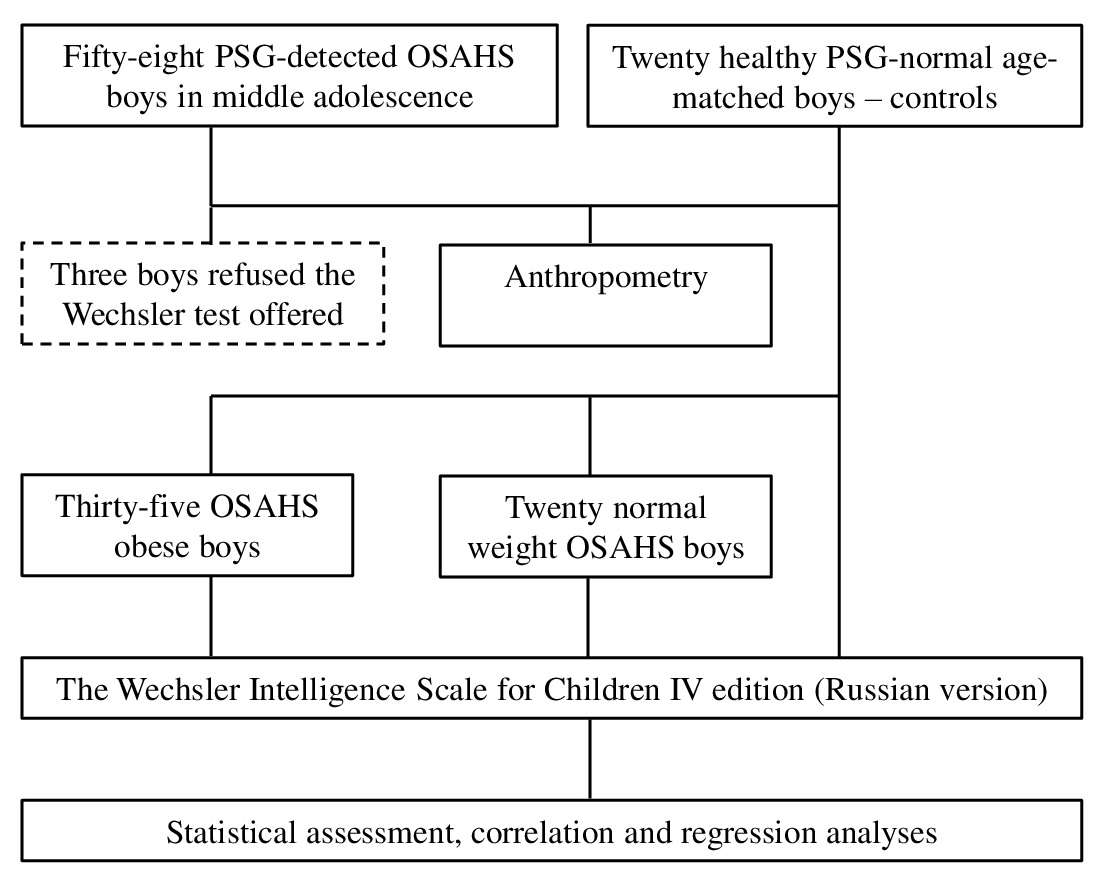
Figure 1. Study design.
Anthropometry
Weight, height, neck circumference (NC), waist circumference (WC), and hip circumference (HC) were measured in the morning in light clothing and without shoes. Weight was measured using digital platform scales with an accuracy of 0.1 kg. Height was measured with an accuracy of 0.1 cm using a medical stadiometer, rigidly mounted to a wall with a sliding bar, in a standing position and during maximum expiration. NC, WC, and HC were measured with a non-elastic measuring tape with an accuracy of 0.1 cm. Based on the measured values, the following indices and ratios were calculated: BMI, WC/HC ratio (cm). Weight and height were assessed using reference values recommended by the World Health Organization (WHO, 2007). Conformity of body weight to standard numerical values was determined by the standard deviation (z-score) – the BMI z-score.
Polysomnography
All adolescents underwent nocturnal PSG using the Neuron-Spectrum-SM system for outpatient electroencephalogram (EEG) and PSG recording (Neurosoft, Russia) in the Laboratory of Somnology and Neurophysiology ward, Scientific Center for Family and Reproductive Health, from 10:00 PM to 6:00 AM. The recording duration was 7-8 hours.
Physiological signals were recorded using specialized electrodes and small, lightweight sensors attached to the scalp and face. The following parameters were recorded: EEG in 6 standard leads with reference electrodes applied to the mastoid processes (F4/A2, F3/A1, C3/A2, C4/A1, O1/A2, O2/A1); eye movements of the right and left eyes via electrooculography (EOG); electromyography (EMG) from the mentalis and tibialis anterior muscles; electrocardiography (ECG) in one standard lead; airflow using a thermal sensor; snoring using a microphone; thoracic and abdominal respiratory efforts using an elastic fixing belt with piezoelectric crystal sensors (respiratory inductance plethysmography); and blood oxygen saturation (pulse oximetry) using a dedicated digital sensor. PSG was terminated upon complete awakening.
The application of electrodes and sensors, their installation and physiological calibration, the elimination of possible artifacts, and the determination and assessment of sleep stages were performed according to the standard method [20]. PSG recordings were evaluated in 30-second periods (i.e., epochs) for sleep stages, respiration, and oxygenation. All recordings were monitored by a sleep specialist and analyzed by qualified clinicians according to the criteria of the American Academy of Sleep Medicine [20]. A panel of PSG parameters was obtained, including AHI, oxygen desaturation index (ODI), arousal index (AI), total sleep time (TST), sleep onset latency time (SOL), wake after sleep onset (WASO), sleep efficiency (SE), duration of stages 1 and 2 of non-rapid eye movement sleep (N1-2), duration of slow-wave sleep (SWS), sleep fragmentation index (SFI, the number of transitions from stage to stage or from stage to wakefulness per 1 hour of sleep); sleep stage transition index (SSTI), i.e., the number of transitions from SWS to N1-2 per 1 hour of sleep). The interpretation of PSG results was performed by a physician with special training, both in automatic and partially manual modes using Neuron-Spectrum.NET software.
Wechsler Intelligence Scale
The Wechsler Intelligence Scale for Children, Fourth Edition (WISC-IV, Russian version edited by Yu. Filimonenko and V. Timofeev), was used by a clinical psychologist to assess the general, verbal, and nonverbal cognitive abilities of adolescents [21, 22]. The WISC-IV was administered in the morning under the following conditions: no feeling of hunger, breakfast had been consumed no later than 1 hour before the test; no previous excessive physical activity; no sedatives; at least 7 hours of sleep the night before the test; no PSG the night before the test; and the adolescent’s positive attitude toward the study. Before the test, a 10-minute interview was conducted to establish rapport with the boys, to identify their behavioral patterns in the psychologist’s office, the nature of their emotions, facial expressions, speech, sociability, interests, correct orientation in time and space, social orientation, etc. All instructions were communicated immediately before the test. The total duration of the examination was 60-90 minutes.
The WISC-IV (Russian version) consists of 12 subtests; the sum of their scores, i.e., the Full-Scale Intelligence Quotient (FSIQ), corresponds to the overall cognitive abilities of the adolescent. We also presented data on five index subscales assessing verbal and nonverbal cognition: 1) Verbal Comprehension Index (VCI); 2) Visual Spatial Index (VSI); 3) Fluid Reasoning Index (FRI); 4) Working Memory Index (WMI); and 5) Processing Speed Index (PSI). The subscales for these five indices are shown in Figure 2. To interpret the WISC results for the FSIQ, we employed the following gradation: 130 pts and above – very high cognitive abilities; 120-129 pts – high cognitive abilities; 110-119 pts – good norm; 90-109 pts represent average cognitive abilities (90-99 pts represent low average, 100-109 pts represent high average); 80-89 points represent poor norm.
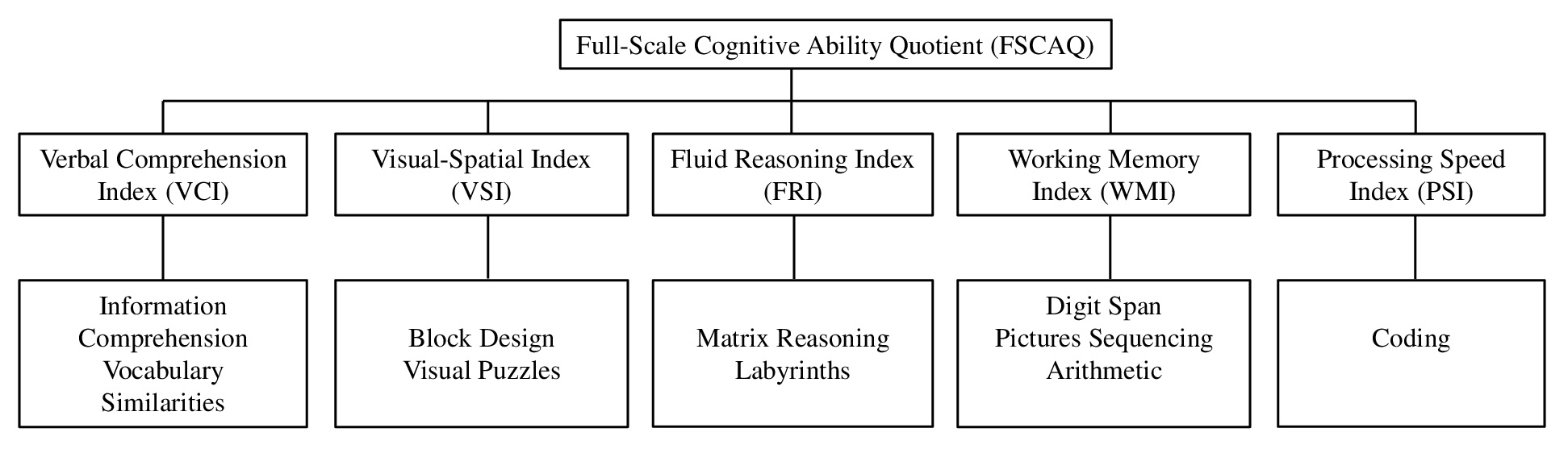
Figure 2. Structure of the Wechsler Intelligence Scale for Children, Fourth Edition (Russian version).
Statistical procedures
Sample size was not calculated in advance. Continuous variables are presented as medians and the 25th and 75th percentiles (Me [25-75%]). Their values were compared using the Kruskal-Wallis H-test (for simultaneous comparisons) and the Mann-Whitney U test (for pairwise comparisons), as the distribution was not normal (based on Shapiro-Wilk test). Categorical variables are presented as proportions. Their values were compared using the chi-squared test or Fisher’s exact test. To investigate the relationship of cognitive abilities with anthropometric parameters and PSG variables, Spearman’s rank correlation analysis was performed. Potential confounding factors were identified during the pilot study using the partial correlation method. Multiple linear regression analysis was performed to test the hypothesis about the influence of certain factors on each verbal and nonverbal cognitive function, as well as on overall cognitive abilities of patients with OSAHS. FSIQ, VCI, VSI, FRI, WMI, and PSI were employed as dependent variables in the regression models; anthropometric parameters and polysomnography parameters were used as independent variables. Collinear factors were excluded from the regression model based on the multiple determination coefficient R². Model coefficients were determined using the least squares method. Model quality was tested using the Durbin-Watson test (from 1.5 to 2.5). P<0.05 was considered statistically significant. For pairwise comparisons of the three groups, the Bonferroni correction was employed (significance level α=0.017) if the H-test for simultaneous comparison was significant (p=0.05). All statistical analyses were performed using Statistica v.10.0 Enterprise (StatSoft, USA).
Results
Patient characteristics by group are presented in Table 1. Age distribution was similar for boys in the three groups. Statistically significant differences in weight and circumference were expected between obese and NW adolescents. However, no significant differences in any anthropometric parameters were detected among NW boys with and without OSAHS. PSG data showed that the AHI, ODI, AI, N1-2, SFI, and SSTI scores were significantly higher, while values of SE and durations of SOL, SWS, and rapid eye movement (REM) phase were significantly shorter in boys with OSAHS vs. the control group. All these parameters were similar between the two OSAHS groups, but a trend toward greater OSAHS severity was observed in obese boys vs. nonobese boys (AHI p=0.041, p-adjusted=0.123 and ODI p=0.029, p-adjusted=0.087).
Table 1. Patient characteristics in adolescent boys with OSAHS
|
Parameter |
NW OSAHS, n=20 (1) |
Obese OSAHS, n=35 (2) |
Controls, n=20 (3) |
p-value (H-test) |
|
Age, years |
16 [15.9-16.5] |
16 [15.7-16.3] |
16 [15.9-16.5] |
0.981 |
|
р1-3=0.661; р1-2=0.872; р2-3=0.629 |
||||
|
BMI z-score |
0.5 [-0.59-0.97] |
2.7 [2.46-3.37] |
0.25 [-0.26-0,.2] |
0.000 |
|
р1-3=0.057, р1-2=0.000; р2-3=0.000 |
||||
|
NC, cm |
37.65 [36-38.5] |
43.5 [40.3-47.2] |
36.5 [34.8-36.9] |
0.000 |
|
р1-3=0.196, р1-2=0.000; р2-3=0.000 |
||||
|
WC, cm |
75 [69.5-78] |
101 [96.2-110.5] |
73 [71.5-75.5] |
0.000 |
|
р1-3=0.587, р1-2=0.000; р2-3=0.000 |
||||
|
HC, cm |
94 [90-95] |
106.5 [98-118] |
95 [93-96.5] |
0.000 |
|
р1-3=0.054, р1-2=0.000; р2-3=0.000 |
||||
|
WC/HC (cm) |
0.79 [0.78-0.82] |
0.97 [0.96-0.98] |
0.78 [0.77-0.79] |
0.000 |
|
р1-3=0.027, р1-2=0.000; р2-3=0.000 |
||||
|
AHI, event/h |
5.71 [3.35; 7.4] |
9.27 [4.2; 13.9] |
0.87 [0.55; 1.1] |
0.000 |
|
р1-3=0.000; р1-2=0.041; р2-3=0.000 |
||||
|
ODI, event/h |
4.35[1.6; 6.3] |
8.7 [5.5; 12.2] |
0.0 [0.0; 0.05] |
0.000 |
|
р1-3=0.000; р1-2=0.029; р2-3=0.000 |
||||
|
AI, event/h |
28.7 [20.3-31.4] |
28.9 [25.7-32.1] |
16.05 [11.6-18.7] |
0.000 |
|
р1-3=0.000, р1-2=0.779; р2-3=0.000 |
||||
|
SOL, min |
15.5 [12.0; 19.0] |
15.0 [10.0; 17.0] |
20.0 [15.0; 21.5] |
0.012 |
|
р1-3=0.002; р1-2=0.233; р2-3=0.004 |
||||
|
NA, n |
3 [2; 4] |
4 [3; 4] |
2 [1; 3] |
0.000 |
|
р1-3=0.002; р1-2=0.233; р2-3=0.000 |
||||
|
N1-2, % |
70.1 [68.3; 75.5] |
72.1 [68,8; 77.1] |
56.2 [55.5; 58.2] |
0.000 |
|
р1-3=0.000; р1-2=0.094; р2-3=0.000 |
||||
|
SWS, % |
14.25[13.15; 15.0] |
14.0 [12.0; 15.0] |
23.2 [22.0; 24.5] |
0.000 |
|
р1-3=0.000; р1-2=0.253; р2-3=0.000 |
||||
|
REM, % |
15.3 [13.8; 17.5] |
14 [11.2; 16] |
20 [18.1; 22.5] |
0.000 |
|
р1-3=0.000; р1-2=0.120; р2-3=0.000 |
||||
|
SFI, event/h |
6.5 [5.5; 8.0] |
7.5 [6.5; 10.1] |
2.8 [2.7; 4.8] |
0.000 |
|
р1-3=0.002; р1-2=0.157; р2-3=0.000 |
||||
|
SSTI, event/h |
0.75 [0.6; 0.9] |
0.81 [0.5; 1.3] |
0.55 [0.45; 0.7] |
0.000 |
|
р1-3=0.011; р1-2=0.598; р2-3=0.004 |
||||
Table 2 presents the WISC-IV (Russian version) scores in male adolescents with OSAHS and different weight status. The FSIQ (p=0.000), VSI (p=0.009), FRI (p=0.009), WMI (p=0.025), and PSI (p=0.000) scores were significantly lower in obese boys with OSAHS. In NW boys with OSAHS, the FSIQ (p=0.003) and PSI (p=0.016) scores were significantly lower than in the control group; however, the difference between the two OSAHS groups was not statistically significant (p=0.038, p-adjusted=0.114). The VSI, FRI, and WMI scores in obese boys with OSAHS were also lower than in boys without OSAHS, but no statistically significant differences were observed between the groups (p1-2=0.217, p-adjusted=0.651, p1-3=0.030, p-adjusted=0.090; p1-2=0.147, p-adjusted=0.441, p1-3=0.215, p-adjusted=0.645; and p1-2=0.178, p-adjusted=0.534, p1-3=0.031, p-adjusted=0.093, respectively). VCI scores were similar in obese boys with OSAHS and in nonobese boys (with or without OSAHS).
Table 2. Scores on the Wechsler Intelligence Scale for Children, Fourth Edition (Russian version) in adolescent boys with OSAHS and different weights
|
Parameter |
NW OSAHS, n=20 (1) |
Obese OSAHS, n=35 (2) |
Controls, n=20 (3) |
p-value (H-test) |
|
FSIQ |
104 [91; 115] |
99 [92; 112] |
115.5 [112; 118] |
0.000 |
|
р1-3=0.003; р1-2=0.999; р2-3=0.000 |
||||
|
VCI |
14[13,5; 15,5] |
15 [14; 16] |
16 [15; 16] |
0.136 |
|
р1-3=0.043; р1-2=0.268; р2-3=0.281 |
||||
|
VSI |
37 [36; 38] |
36 [36; 38] |
40 [36,5; 40] |
0.009 |
|
р1-3=0.030; р1-2=0.217; р2-3=0.005 |
||||
|
FRI |
31,5 [27,5; 33,5] |
30 [28; 32] |
33,5 [30,5; 34,5] |
0.009 |
|
р1-3=0.215; р1-2=0.147; р2-3=0.002 |
||||
|
WMI |
16 [15; 17,5] |
15 [13; 17] |
18 [16; 22] |
0.025 |
|
р1-3=0.031; р1-2=0.178; р2-3=0.006 |
||||
|
PSI |
17 [16,5; 19] |
16,5 [13; 17] |
19 [18; 20] |
0.000 |
|
р1-3=0.016; р1-2=0.038; р2-3=0.000 |
||||
To examine the relationship between verbal and non-verbal cognitive measures and other patient characteristics, a Spearman’s rank correlation analysis was conducted (Table 3).
Table 3. Correlations between patient characteristics and FSIQ, and five index subscale scores in adolescent boys with OSAHS
|
|
FSIQ |
VCI |
VSI |
FRI |
WMI |
PSI |
|
NW boys |
||||||
|
NC |
-0.39 |
-0.61** |
-0.47* |
-0.06 |
-0.54* |
-0.38 |
|
WC/HC |
-0.33 |
-0.36 |
-0.23 |
-0.17 |
-0.53* |
-0.63** |
|
AHI |
-0.07 |
-0.09 |
-0.42 |
-0.46* |
-0.00 |
-0.01 |
|
ODI |
-0.06 |
-0.11 |
-0.46* |
-0.03 |
-0.03 |
-0.01 |
|
AI |
-0.07 |
-0.17 |
-0.48* |
-0.12 |
-0.02 |
-0.21 |
|
SWS |
0.14 |
0.14 |
0.31 |
0.19 |
0.54* |
0.07 |
|
REM |
0.28 |
0.53* |
0.22 |
0.07 |
0.07 |
0.44* |
|
Obese boys |
||||||
|
AHI |
-0.70** |
-0.60** |
-0.43* |
-0.42* |
-0.37* |
-0.67** |
|
ODI |
-0.61** |
-0.53* |
-0.51* |
-0.51* |
-0.35* |
-0.72** |
|
AI |
-0.04 |
-0.35* |
-0.14 |
-0.14 |
-0.14 |
-0.27 |
|
SOL |
0.08 |
0.12 |
0.11 |
0.28 |
0.10 |
0.45** |
|
NA |
-0.05 |
-0.12 |
-0.34* |
-0.06 |
-0.42* |
-0.05 |
|
REM |
0.29 |
0.29 |
0.20 |
0.28 |
0.22 |
0.42* |
|
SFI |
-0.70* |
-0.55* |
-0.45* |
-0.45* |
-0.39* |
-0.68** |
|
SSTI |
-0.64** |
-0.28 |
-0.52* |
-0.43* |
-0.43* |
-0.63** |
As can be seen from Table 3, the FSIQ did not correlate with most examined parameters in NW adolescent boys with OSAHS. Compared with NW boys, obese boys with OSAHS exhibited a statistically significant inverse correlation of overall cognition and OSAHS severity with the degree of sleep disturbance expressed via SFI. Verbal cognitive abilities expressed via VCI in NW adolescent boys with OSAHS were inversely correlated with NC. PSG variables in both OSAHS groups also demonstrated some significant correlations with the VCI. When assessing the relationship between nonverbal cognitive functions and the characteristics of boys, we revealed that both NC and WC/HC values in NW participants exhibited significant inverse correlations with WISC subscale scores in the VSI, WMI, and PSI domains, while AHI and ODI scores showed similar correlations with FRI and VSI scores, respectively. Significant direct correlations with SWS and REM sleep duration were additionally present for WMI and PSI scores, respectively. Meanwhile, we detected no significant correlation between overweight and cognitive abilities in obese participants. However, in this group, more significant correlations were found between nonverbal cognition scores and each of the OSAHS severity indicators (AHI and ODI scores), and the degree of sleep fragmentation (AI, NA, SFI, and SSTI scores), as well as with SWS and REM sleep durations (in the PSI domain only).
We conducted a multiple linear regression analysis to evaluate the significant correlations between cognitive function scores in NW and obese adolescent males with OSAHS, including FSIQ, VCI, VSI, FRI, WMI, and PSI scores (Table 4).
Table 4. Multiple linear regression analysis of risk factors for cognitive impairment in adolescent boys with OSAHS
|
Variable |
β-coefficient |
p-value |
Durbin-Watson Test |
|
Full-Scale Intelligence Quotient |
|
||
|
AHI |
-2.575 |
0.002 |
2.33 |
|
ODI |
-1.032 |
0.012 |
|
|
Verbal Comprehension Index |
|
||
|
NC |
-1.204 |
0.003 |
1.76 |
|
SFI |
-0.409 |
0.035 |
1.98 |
|
Visual Spatial Index |
|
||
|
SFI |
-1.348 |
0.001 |
2.09 |
|
Fluid Reasoning Index |
|
||
|
SFI |
-0.286 |
0.035 |
1.76 |
|
Working Memory Index |
|
||
|
NC |
-0.723 |
0.017 |
2.43 |
|
NA |
-0.916 |
0.014 |
2.42 |
|
AHI |
-0.150 |
0.035 |
|
|
Processing Speed Index |
|
||
|
WC/HC |
-29.225 |
0.000 |
2.14 |
|
SFI |
-0.696 |
0.000 |
1.94 |
The model included 55 observations. After including NC and WC/HC values, SOL duration, NA time, AHI, ODI, AI, SFI, and SSTI scores, SWS and REM time duration in the multivariate linear regression analysis, NC and WC/HC values for nonobese boys and AHI, ODI, NA, and SFI scores for obese boys were identified as risk factors for VCI, WMI, and PSI; and, correspondingly, for lower FSIQ, VCI, VSI, FRI, WMI, and PSI scores.
Discussion
OSAHS constitutes a serious societal problem, but it remains underrecognized and underdiagnosed in childhood and adolescence. Importantly, OSAHS has a negative impact on children’s cognitive abilities, which in turn affects their academic performance, quality of life, and health, most likely due to intermittent hypoxia and sleep fragmentation [14]. At the same time, scientists suggest that attention deficit is more closely associated with changes in sleep structure, and global cognitive impairment correlates with nocturnal desaturation and cerebral hypoxia [16, 23, 24]. Moreover, for children, the decisive role in this process is played not so much by the level of periodic desaturation, but by its frequency during the night (desaturation index) [25]. Several studies show that cognitive domains are affected equally in both adults and children, for example, executive functions and attention. Specific impairments in functions such as phonological processing have also been reported in children [26, 27]. Obesity is a major risk factor for the development of OSAHS. It exacerbates cognitive impairment in children and adolescents [11, 28]. Our study confirmed that obese adolescents have higher AHI and ODI scores than their NW peers, suggesting a link between obesity and the severity of nocturnal hypoxia. Both obesity and OSAHS in early life may not only increase the risk of developing dementia in adulthood but also interact with cognitive dysfunction in adolescents well before the onset of dementia [24, 29].
Notably, cognitive assessment findings regarding OSAHS in late adolescence typically indicate a decline in overall cognitive abilities, with a predominant impairment in nonverbal functions in this cohort of patients. This trend was most pronounced in the obese group. Higher rates of intermittent hypoxia are known to result in more severe neuropathological changes in the cerebral cortex and hippocampus, which may exacerbate memory and executive function deficits over time [11, 30]. We identified an 8-year prospective study by Australian researchers examining factors associated with cognitive impairment in older adults with OSAHS. The following sleep measures were examined: AHI, ODI, percentage of sleep stages, and TST. Significant associations were found between the proportion of sleep stages I and II and ODI and worse scores on visual attention, PSI, and executive functions [31], which is partially consistent with our findings in adolescents. Thus, the present study found that four of the five WISC-IV index scores were significantly lower in male adolescents with OSAHS and obesity than in both the NW OSAHS group and the control group, and OSAHS-related indices were inversely associated with the FSIQ and five index subscales, indicating an important role of obesity in the development of cognitive impairment caused by the severity of OSAHS.
These findings are consistent with the results of other previous studies that have also examined the impact of obesity on cognitive impairment in children and adolescents with OSAHS. For example, Vitelli et al. (2015) [32], Vatch et al. (2019) [33], and Xu et al. (2020) [11] found that children with OSAHS and obesity have lower scores on intelligence, memory, learning, academic achievement, behavior, and executive functions than controls (non-OSAHS NW, non-OSAHS obese, or nonobese participants with OSAHS). It can be assumed that remittent nocturnal hypoxia and sleep fragmentation have an undeniable impact on cognitive functions in adolescents with OSAHS, especially with concomitant obesity, as a factor in nocturnal hypoventilation syndrome and, accordingly, the severity of oxygen deficiency, as well as potentiating chronic neuroinflammation of the brain (presumably in the areas of the frontal, temporal, parietal and limbic cortex, as well as in the subcortical structures – the caudate nucleus and hippocampus) [11, 28, 33, 34]. In accordance with previous studies, our study also confirmed that adolescents with obesity have higher levels of AHI and ODI vs. their peers with NW, which indicates a link between obesity and the severity of nocturnal hypoxia.
Our study also yielded interesting results regarding nonobese adolescent boys. General cognitive abilities were significantly reduced in NW boys with OSAHS as well, as reflected by a significant trend toward decreased verbal and nonverbal abilities, along with significant impairment in visual attention and cognitive processing speed compared to controls, impacting memory and executive functions. These cognitive functions are associated with specific cortical and subcortical structures, the so-called action-mode network (AMN) or cingulo-opercular network (CON) of the brain [35], which holds promise for study in patients with OSAHS. We also established that anthropometric parameters such as NC value and WC/HC ratio are inversely associated with verbal performance, as well as visuospatial abilities, memory, and cognitive processing speed in boys with normal BMI, but not in obese adolescents. Our primary findings concern these interactions, which have not previously been described in similar studies. NC predicts OSAHS [36], and we hypothesize that this anthropometric parameter may independently predict cognitive impairment in NW adolescent males with OSAHS, which requires further study. NC value and WC/HC ratio may be additional screening tools for cognitive abilities in young men with OSAHS.
Conclusion
As a serious public health problem, OSAHS has been considered a major risk factor for the development of cognitive impairment (particularly, in combination with male gender and obesity). This study demonstrates that cognitive performance in adolescent males with OSAHS declines, with a predominant decline in nonverbal abilities. This trend is most pronounced in obesity, which exacerbates both hypoxia and sleep fragmentation and potentiates chronic neuroinflammation (presumably in the prefrontal, temporal, parietal, and limbic cortices, as well as in subcortical structures such as the caudate nucleus and hippocampus). These findings are novel and potentially interesting for further discussion of the impact of OSAHS on cognitive development in late adolescence and warrant further study, considering the additional results and discussions of this study, including the identification of predictors of cognitive impairment in adolescents of different weight categories.
Study limitations
This was a pilot study, and therefore it has several limitations: first and foremost, low statistical power and the lack of a precalculated sample size, which potentially limits our ability to detect more relationships across the study groups and the generalizability of the results. We believe that addressing this limitation in future studies will help us exclude deviations from the STROBE checklist when calculating the sample size and strengthen the study, because we will be able to stratify participants based on the severity of both OSAHS and obesity. We will also be able to consider a general linear model to assess the possible effect of OSAHS severity, effect of the severity of obesity alone, as well as the effect of comorbid OSAHS and obesity, on the severity of cognitive dysfunction. A second limitation of this study was that only men were assessed, thereby eliminating the effect of gender. However, the study results limit extrapolation to girls, which also requires further research to examine the relationship between cognitive function and OSAHS, body weight, and gender. Furthermore, the lack of consideration of parental education, socioeconomic status, and physical activity level of study participants is a limitation as well, as these data were not included in the survey. We may reconsider the methodology in our future studies.
Acknowledgments
We would like to thank the staff of the Clinic of the Scientific Centre for Family Health and Human Reproduction Problems and its Chief Physician, ScD Olga V. Bugun, for their assistance in recruiting study participants and conducting their clinical examinations, as well as the patients and their parents who agreed to participate in this study. This research was performed using equipment from the Center for the Development of Advanced Personalized Medical Technologies of the Scientific Centre for Family Health and Human Reproduction Problems, Irkutsk.
Conflict of interest
The authors declare that they have no conflicts of interest.
Funding
The work was carried out on a state assignment on the research topic «Key patterns of development of childhood and adolescent diseases as the basis for a health-saving approach in modern pediatrics» (No. 126020216228-0).
Data availability statement
The study data have been included in database No. 2025623924 since September 19, 2025.
Ethical approval
All adolescents and their parents signed of individual informed consent for study participation. All procedures performed in this study complied with the 1964 Declaration of Helsinki and its subsequent amendments. The study protocol was approved by the Biomedical Ethics Committee of the Scientific Centre for Family Health and Human Reproduction Problems (reference number 3, February 26, 2018). All adolescents and their parents signed individual informed consent to participate in the study.
AI use statement
The authors confirm that they did not use AI or AI-assisted technologies.
- Read N, Jennings C, Hare A. Obstructive sleep apnoea-hypopnoea syndrome. Emerg Top Life Sci 2023; 7(5): 467-476. https://doi.org/10.1042/ETLS20180939.
- Saporiti JM, de Holanda TA, Torino GG, Boscato N. Obstructive sleep apnoea-associated factors in children and adolescents diagnosed by polysomnography: A scoping review. Respir Med 2025; 237: 107942. https://doi.org/10.1016/j.rmed.2025.107942.
- Messineo L, Bakker JP, Cronin J, Yee J, White DP. Obstructive sleep apnea and obesity: A review of epidemiology, pathophysiology and the effect of weight-loss treatments. Sleep Med Rev 2024; 78: 101996. https://doi.org/10.1016/j.smrv.2024.101996.
- Votineva A, Prokhorova Zh, Polyakov V, Rychkova L, Yaroslavtseva I. Change in the motivation to receive treatment by overweight adolescent girls in the course of counseling. Int J Biomed 2020; 10(4): 448-452. https://doi.org/10.21103/Article10(4)_OA23.
- Berdina ON, Madaeva IM, Bolshakova SE, Tsykunova MV, Sholokhov LF, Rashidova MA, et al. Circadian melatonin secretion in obese adolescents with or without obstructive sleep apnea. Rus Open Med J 2020; 9: e0402. https://doi.org/10.15275/rusomj.2020.0402.
- Zhang W, Shen Y, Ou X, Wang H, Liu S. Sleep disordered breathing and neurobehavioral deficits in children and adolescents: a systematic review and meta-analysis. BMC Pediatr 2024; 24(1): 70. https://doi.org/10.1186/s12887-023-04511-2.
- Hill W. On Some Causes of Backwardness and Stupidity in Children: And the Relife of these Symptoms in Some Instances by Naso-Pharyngeal Scarifications. Br Med J 1889; 2(1500): 711-712. https://doi.org/10.1136/bmj.2.1500.711.
- Au CT, Voutsas G, Katz SL, Chan A, Narang I. Poor sleep quality and its associated neurocognitive function in children with obesity with or without obstructive sleep apnea. Sleep Breath 2024; 28(1): 477-487. https://doi.org/10.1007/s11325-023-02886-1.
- Madaeva I, Berdina O, Kolesnikova L, Semenova N. Gender-related differences of sleep pattern characteristics in obstructive sleep apnea. Sleep Med 2017; 40(S1): e204-e205. https://doi.org/10.1016/j.sleep.2017.11.598.
- Chireh B, D’Arcy C. A comparison of the prevalence of and modifiable risk factors for cognitive impairment among community-dwelling Canadian seniors over two decades, 1991–2009. PLoS One 2020; 15(12): e0242911. https://doi.org/10.1371/journal.pone.0242911.
- Xu J, Wang X, Qian C, Han W, Li X, Ding Y. Exploration of the association between obesity and cognitive impairment in Chinese children with mild or moderate obstructive sleep apnea-hypopnea syndrome. J Pediatr Nurs 2020; 53: 36-40. https://doi.org/10.1016/j.pedn.2020.03.013.
- Scarpina F, Bastoni I, Cappelli S, Priano L., Giacomotti E, Castelnuovo G, et al. Psychological well-being in obstructive sleep apnea syndrome associated with obesity: The relationship with personality, cognitive functioning, and subjective and objective sleep quality. Front Psychol 2021; 12: 588767. https://doi.org/10.3389/fpsyg.2021.588767.
- Zaffanello M, Pietrobelli A, Zoccante L, Ferrante G, Tenero L, Piazza M, et al. Mental health and cognitive development in symptomatic children and adolescents scoring high on habitual snoring: role of obesity and allergy. Children (Basel) 2023; 10(7): 1183. https://doi.org/10.3390/children10071183.
- Madaeva I, Berdina O, Polyakov V, Kolesnikov S. Obstructive sleep apnea and hypertension in adolescents: Effect on neurobehavioral and cognitive functioning. Can Resp J 2016; 2016: 3950914. https://doi.org/10.1155/2016/3950914.
- Berdina O, Madaeva I, Bolshakova S, Polyakov V, Bugun O, Rychkova L. Alteration of sleep homeostasis and cognitive impairment in apneic obese adolescents. Sleep and Biological Rhythms 2021; 19(3): 285-295. https://doi.org/10.1007/s41105-021-00317-w.
- Aakre JA, Schulz J, Ballard C, Corbett A, Bjorvatn B, Aarsland D, et al. Self-reported sleep fragmentation and sleep duration and their association with cognitive function in PROTECT, a large digital community-based cohort of people over 50. Int J Geriatr Psychiatry 2023; 38(1): e6022. https://doi.org/10.1002/gps.6022.
- Darenskaya MA, Rychkova LV, Kolesnikov SI, Semenova NV, Nikitina OA, Lesnaya AS, et al. Oxidative damage of DNA, proteins and C-reactive protein parameters in girls and boys with exogenous constitutional obesity. Bull Exp Biol and Med 2024; 176(3): 328-331. https://doi.org/10.1007/s10517-024-06018-x.
- Madaeva IM, Kurashova NA, Semenova NV, Ukhinov EB, Kolesnikov SI, Kolesnikova LI. Free radical oxidation of lipids as an indicator of the effectiveness of CPAP therapy in apnea syndrome. Bull Exp Biol Med 2021; 170(6): 799-801. https://doi.org/10.1007/s10517-021-05158-8.
- Xanthopoulos MS, Gallagher PR, Berkowitz RI, Radcliffe J, Bradford R, Marcus CL. Neurobehavioral functioning in adolescents with and without obesity and obstructive sleep apnea. Sleep 2015; 38(3): 401-410. https://doi.org/10.5665/sleep.4498.
- Berry RB, Budhiraja R, Gottlieb DJ, Gamaldo ChE, Harding SM, Lloyd RM, et al. The AASM manual for the scoring of sleep and associated events: Rules, terminology and technical specifications. Version 2.6. Darien IL, Ed. American Academy of Sleep Medicine. 2020: 15-36.
- Grizzle R. Wechsler Intelligence Scale for Children, Fourth Edition. In: Goldstein S, Naglieri JA, Eds. Encyclopedia of Child Behavior and Development. New York, NY: Springer. 2011: 1553-1555. https://doi.org/10.1007/978-0-387-79061-9_3066.
- Filimonenko YuI, Timofeev VI. D. Wechsler's Intelligence Assessment Test (Children’s Version): Methodological Guidelines. St. Petersburg: IMATON; 2016; 106 p. Russian. https://search.rsl.ru/ru/record/01008263738.
- Filimonenko YuI, Timofeev VI. Wechsler Intelligence Test (Adult Version): A Methodological Guide. St. Petersburg: IMATON. 2012; 109 p. Russian. https://rusneb.ru/catalog/000199_000009_009571753.
- Krysta K, Bratek A, Zawada K, Stepańczak R. Cognitive deficits in adults with obstructive sleep apnea compared to children and adolescents. J Neural Transm (Vienna) 2017; 124(Suppl 1): 187-201. https://doi.org/10.1007/s00702-015-1501-6.
- Lo Bue A, Salvaggio A, Insalaco G. Obstructive sleep apnea in developmental age. A narrative review. Eur J Pediatr 2020; 179(3): 357-365. https://doi.org/10.1007/s00431-019-03557-8.
- Nasr N, Traon AP, Czosnyka M, Tiberge M, Schmidt E, Larrue V. Cerebral autoregulation in patients with obstructive sleep apnea syndrome during wakefulness. Eur J Neurol 2009; 16(3); 386-391. https://doi.org/10.1111/j.1468-1331.2008.02505.x.
- Lau EY, Choi EW, Lai ES, Lau KNT, Au CT, Yunget WH, et al. Working memory impairment and its associated sleep related respiratory parameters in children with obstructive sleep apnea. Sleep Med 2015; 16(9): 1109-1115. https://doi.org/10.1016/j.sleep.2015.04.025.
- Testa D, Carotenuto M, Precenzano F, Russo A, Donadio A, Marcuccio G, et al. Evaluation of neurocognitive abilities in children affected by obstructive sleep apnea syndrome before and after adenotonsillectomy. Acta Otorhinolaryngol Ital 2020; 40(2): 122-132. https://doi.org/10.14639/0392-100X-N0267.
- Poh BK, Lee ST, Yeo GS, Tang KC, Noor Afifah AR, Siti Hanisa A, et al. Low socioeconomic status and severe obesity are linked to poor cognitive performance in Malaysian children. BMC Public Health 2019; 19(Suppl. 4): 541. https://doi.org/10.1186/s12889-019-6856-4.
- Sellbom KS, Gunstad J. Cognitive function and decline in obesity. J Alzheimers Dis 2012; 30(Suppl. 2): S89–S95. https://doi.org/10.3233/JAD-2011-111073.
- Yerlikaya D, Emek-Savas DD, Bircan Kursun B, Oztura I, Yener GG. Electrophysiological and neuropsychological outcomes of severe obstructive sleep apnea: effects of hypoxemia on cognitive performance. Cogn Neurodyn 2018; 12(5): 471-480. https://doi.org/10.1007/s11571-018-9487-z.
- Parker JL, Appleton SL, Adams RJ, Melaku YA, D’Rozario AL, Wittert GA, et al. The association between sleep spindles and cognitive function in middle-aged and older men from a community-based cohort study. Sleep Health 2023; 9(5): 774-785. https://doi.org/10.1016/j.sleh.2023.03.007.
- Vitelli O, Tabarrini A, Miano S, Rabasco J, Pietropaoli N, Forlani M, et al. Impact of obesity on cognitive outcome in children with sleep-disordered breathing. Sleep Med 2015; 16(5): 625-630. https://doi.org/10.1016/j.sleep.2014.12.015.
- Watach AJ, Radcliffe J, Xanthopoulos MS, Novick MB, Sawyer AM. Executive function impairments in adolescents with obesity and obstructive sleep apnea syndrome. Biol Res Nurs 2019; 21(4): 377-383. https://doi.org/10.1177/1099800419846411.
- Marcus CL, Keenan BT, Huang J, Yuan H, Pinto S, Bradford R, et al. The obstructive sleep apnoea syndrome in adolescents. Thorax 2017; 72(8): 720-728. https://doi.org/10.1136/thoraxjnl-2016-208660.
- Dosenbach NUF, Raichle ME, Gordon EM. The brain’s action-mode network. Nat Rev Neurosci 2025; 26(3): 158-168. https://doi.org/10.1038/s41583-024-00895-x.
- Katz S, Murto K, Barrowman N, Clarke J, Hoey L, Momoli F, et al. Neck circumference percentile: A screening tool for pediatric obstructive sleep apnea. Pediatr Pulmonol 2015; 50(2): 196-201. https://doi.org/10.1002/ppul.23003.
Received 26 February 2026, Revised 25 April 2026, Accepted 6 June 2026
© 2026, Russian Open Medical Journal
Correspondence to Olga N. Berdina. Phone: +7(3952)207636. E-mail: goodnight_84@mail.ru.